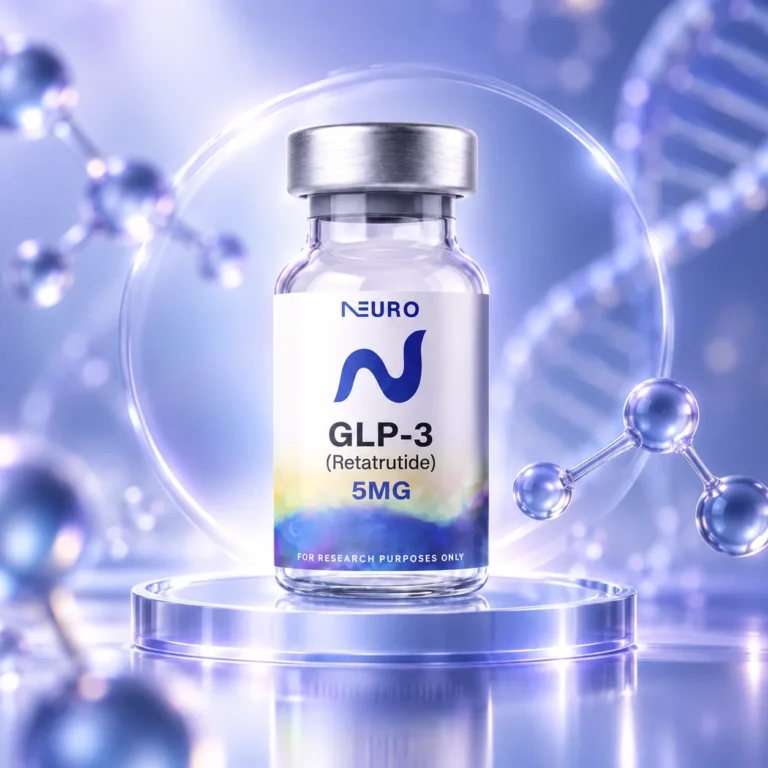
Retatrutide (LY3437943), developed by Eli Lilly and Company, is an investigational peptide currently not approved for human consumption and is under investigation. It works by targeting three hormone receptors:
- Glucose-dependent insulinotropic polypeptide (GIP)
- Glucagon-like peptide-1 (GLP-1)
- Glucagon
This unique triple-action mechanism makes it different from the rest of the peptides that have been developed for the treatment of various metabolic disorders. For a closer look, see our overview of how retatrutide targets three receptors.
There have been several successful trials conducted on retatrutide’s clinical performance, with the most prominent one published in the New England Journal of Medicine.
According to the article, a phase 2 clinical trial that was completed in 2023 assessed the efficacy and safety of once-weekly subcutaneous injections of retatrutide in adults with obesity.
The results revealed that all doses of the medication had led to considerable weight reduction compared to the placebo group after 48 weeks of treatment. The gastrointestinal adverse events were the most commonly reported side effects.
The following phase 3 clinical trials have also been completed in July 2026, with Eli Lilly announcing top-line data from the TRIUMPH trials and preparing to submit a biologics license application to the Food and Drug Administration (FDA) in the first quarter of 2027.
Despite the positive results reported in several retatrutide clinical trials, retatrutide remains an investigational peptide and is not approved for human use.
Note: All products sold by NeuroPeptides are strictly intended for research purposes only and are not approved for human use.
Retatrutide : A Quick Overview
| Property | Details |
| Generic Name | Retatrutide |
| Development Code | LY3437943 |
| Drug Class | Triple hormone receptor agonist |
| Major Target | GIP, GLP-1, and glucagon receptors |
| Developer | Eli Lilly and Company |
| Molecular Type | Synthetic peptide |
| CAS number | 2381089-83-2 |
| PubChem ID | 171390338 |
| Status | Investigation (RUO) |
The IUPHAR/BPS Guide to Pharmacology lists retatrutide as a peptide and thus confirms its CAS Registry Number and PubChem identifier.
Retatrutide: Mechanism of Action
Retatrutide works as a triple receptor agonist, meaning it activates three receptors: the GIP receptor (GIPR), GLP-1 receptor (GLP-1R), and glucagon receptor (GCGR).
A 2022 study by Coskun et al., published in Cell Metabolism, examined retatrutide, also known as LY3437943, during its early development. The researchers found that retatrutide showed activity at all three receptors. In laboratory testing, its activity was relatively balanced at the GLP-1 and glucagon receptors, while stronger activity was observed at the GIP receptor.
In preclinical mouse studies, activation of these pathways was associated with reduced food intake and increased energy expenditure.
However, findings from animal studies should not be assumed to produce the same effects in humans, and retatrutide remains an investigational compound under clinical study.
1. GLP-1 Receptor Function
The GLP-1 receptor is part of the incretin signaling system and plays an important role in glucose regulation and appetite-related signaling. Activation of this receptor can support glucose-dependent insulin secretion and influence signals involved in food intake and satiety.
Retatrutide’s activity at the GLP-1 receptor is one part of its broader triple-receptor mechanism. In a 2023 Phase 2 obesity trial published in the New England Journal of Medicine, retatrutide was described as an agonist of the GLP-1, GIP, and glucagon receptors.
Because retatrutide is still investigational, these findings should be interpreted within the context of ongoing clinical research.
2. GIP Receptor Activity
GIP is an incretin hormone involved in glucose-dependent insulin secretion and metabolic signaling. Retatrutide also activates the GIP receptor, which forms one part of its triple-receptor mechanism.
In the Cell Metabolism study by Coskun et al., retatrutide showed greater activity at the human GIP receptor than at the human GLP-1 and glucagon receptors in laboratory testing.
This pathway has also been studied in clinical research. A Phase 1b randomized trial by Urva et al., published in The Lancet, evaluated LY3437943, the development name for retatrutide, in adults with type 2 diabetes.
These findings help describe the pharmacological activity of retatrutide, but the compound remains investigational and is still being studied in clinical trials.
3. Glucagon Receptor Activity
The third part of retatrutide’s mechanism involves activation of the glucagon receptor (GCGR). Glucagon signaling plays an important role in liver glucose metabolism, energy balance, and nutrient use. If you are planning laboratory work, our catalog lists Retatrutide 30mg research vial.
Researchers are interested in this pathway because glucagon receptor activity may influence energy expenditure and substrate metabolism.
In the 2022 Cell Metabolism study, researchers reported that, in obese mice, retatrutide-related weight reduction appeared to involve two main effects: reduced food intake linked mainly to GIP and GLP-1 receptor activity, and increased energy expenditure associated with glucagon receptor activity.
These findings were observed in preclinical animal models and should not be assumed to produce the same effects in humans.
Why the Triple-Receptor Mechanism Matters
The main scientific interest of retatrutide is that it targets GIP, GLP-1, and glucagon signaling rather than just one pathway. The developers proposed that the combination of these pathways may affect both energy intake and energy expenditure.
The preliminary results are consistent with biological rationale, but do not prove that all proposed mechanisms have equal effect in humans. Thus, the researchers moved from laboratory and animal studies into controlled human trials.
The biological activity of retatrutide was further supported by clinical data from a Phase 2 obesity study by Jastreboff et al. published in The New England Journal of Medicine in 2023. Retatrutide’s triple-receptor pharmacology was established in the clinic in a randomized, double-blind trial in which multiple weekly doses were tested over 48 weeks.
What Does the Research Say About Retatrutide?
While retatrutide has advanced from early pharmacology research to large phase 3 trials, the evidence pertains to clinical findings on weight loss, glucose regulation, metabolic health indicators, and tolerability. It is too early to conclude the medication as an established treatment.
1. Early Clinical Research
A 2022 phase 1b, randomized, double-blind, placebo-controlled trial in The Lancet evaluated LY3437943 for use in participants with type 2 diabetes and explored the drug’s pharmacokinetics, glucose-lowering function, impact on body weight, and tolerability. The article revealed a dose-dependent change in weight and glycemic indices and identified gastrointestinal side effects as the most frequent adverse events. This early-stage study provided initial clinical evidence on the drug’s potential in humans.
2. Phase 2 Obesity Trial
The most informative study on retatrutide so far comes from a phase 2, randomized, double-blind, placebo-controlled trial published in NEJM. This 2023 study enrolled 338 adults with obesity or overweight with an additional weight-related condition in a 48-week intervention.
According to the published findings, the least-squares mean changes in body weight from baseline were – 8.7% for the 1 mg group, – 11.8% for the 3 mg group, – 16.3% for the 6 mg group, – 21.7% for the 9 mg group, – 23.6% for the 12 mg group, versus – 2.1% for the placebo.
The greatest proportion of patients who achieved at least a 15% decrease in weight was observed in the 12 mg group (44.3%). The most common adverse events were treatment-emergent gastrointestinal disorders such as nausea, diarrhea, and vomiting, which were mostly dose-dependent.
The incidence of gastrointestinal adverse events decreased when the starting dose was between 3 mg and 6 mg. Additionally, the treatment groups showed consistent and clinically relevant increases in heart rate from baseline that peaked at week 24 before declining.
3. Phase 3 Clinical Trials
The evidence about retatrutide’s clinical effectiveness comes from the TRIUMPH phase 3 trials. According to Eli Lilly’s 2026 press release, the company has reported positive top-line results from TRIUMPH-1, one of the key studies in the phase 3 program.
Regarding TRIUMPH-1 findings, the trial’s participants who received 12 mg of retatrutide had recorded a 28.3% average weight reduction at week 80. TRIUMPH-1 was a study of patients with obesity or overweight with at least one weight-related condition without diabetes.
In July 2026, Lilly announced similar positive results from TRIUMPH-2 and TRIUMPH-3. While TRIUMPH-2 was an obesity study in patients with type 2 diabetes, TRIUMPH-3 was a trial of patients with severe obesity and established cardiovascular disease. Across all three trials, the highest dose of retatrutide resulted in the highest average percentage of weight reduction, with 20.8% and 22.6% in TRIUMPH-2 and TRIUMPH-3, respectively.
The research findings suggest that retatrutide has meaningful clinical efficacy in reducing body weight with notable tolerability concerns. However, it is important to note that these are top-line data published as press releases; the final peer-reviewed versions of these articles may provide more context and detail about the findings.
Retatrutide, Semaglutide and Tirzepatide: A Comparison
Retatrutide is different from semaglutide and tirzepatide mainly through its three-receptor mechanism. Semaglutide activates only the GLP-1 receptor, while tirzepatide activates both the GIP and GLP-1 receptors. Retatrutide adds glucagon receptor activity to these two incretin pathways. This is covered further in our overview of retatrutide vs. semaglutide.
| Characteristics | Retatrutide | Semaglutide | Tirzepatide |
| Target | GIP, GLP-1, glucagon | GLP-1 | GIP, GLP-1 |
| Receptor Activity | Triple agonist | GLP-1 receptor agonist | Dual GIP/GLP-1 agonist |
| Status | Investigational | Approved medication | Approved medication |
| Clinical Research | Phase 3 trials | Extensive Phase 3 evidence | Extensive Phase 3 evidence |
| Activity Glucagon Receptor | Yes | No | No |
| Major Research Interest | Combined metabolic signaling | GLP-1 signaling | Combined GIP and GLP-1 signaling |
Safety and Tolerability of Retatrutide
Safety and tolerability continue to be important areas of research with retatrutide. Clinical trials have reported several adverse events, with gastrointestinal symptoms among the most common. Retatrutide is investigational, and the current evidence does not support long-term safety with widespread use.
In their 2023 Phase 2 obesity trial published in the New England Journal of Medicine, Jastreboff et al. reported that nausea, diarrhea, and vomiting were the most frequent adverse events. They also noted that GI events tended to increase in frequency with increasing doses of retatrutide.
The same study also reported that some participants stopped treatment because of adverse events. They also found an increase in heart rate during treatment, with an average increase that peaked at approximately week 24 and then declined later in the study.
Another Phase 1b study published in The Lancet by Urva et al assessed the safety and tolerability of LY3437943 in adults with type 2 diabetes. Adverse events, vital signs, laboratory measurements, and other clinical parameters were monitored by investigators during the dose-escalation study.
Retatrutide is being developed in Phase 3, and researchers are still evaluating its long-term safety profile. These studies are particularly important because larger participant populations and longer follow-up periods can identify safety patterns that early trials may not detect.
What Researchers are Searching for?
Current clinical studies include:
- Gastrointestinal tolerance
- Dose-related adverse events
- Changes in heart rate.
- Treatment cessation
- Laboratory and metabolic parameters
- Longer-term safety outcomes
It is important to differentiate between clinical-trial evidence and research-product use. Trial results describe outcomes under controlled conditions with specific formulations, protocols, doses, and monitoring systems. They do not establish that an unapproved retatrutide research product is safe or appropriate for human use.
For this reason, retatrutide should continue to be described as an investigational compound until regulatory authorities complete their review.
Is Retatrutide FDA-Approved?
No. Retatrutide is not FDA-approved as of August 2026. It is currently being developed as an investigational drug by Eli Lilly. Eli Lilly announced positive outcomes from various Phase 3 studies conducted in 2026; however, positive clinical trial results do not automatically lead to drug approval.
Eli Lilly noted in July 2026 that it plans to file for a BLA with the FDA in the first quarter of 2027. Hence, this means that the process of drug approval is still ongoing.
According to the FDA, retatrutide is not an FDA-approved drug and has not been established as safe and effective for the treatment of any disease condition. Moreover, according to the FDA, retatrutide may not be compounded under federal law.
Such a difference is critical for research laboratories. Results from clinical trials are sources of useful data on the pharmacology, effectiveness, and safety of retatrutide. This does not imply that retatrutide in commercial preparations has the same formulation or clinical status as the retatrutide used during Lilly-sponsored trials.
Therefore, when preparing research-related material, one should refer to retatrutide as an investigational drug.
Retatrutide Research: What Researchers Should Know
Researchers working with retatrutide should focus on:
- Material identity
- Analytical testing
- Documentation
- Controlled laboratory handling
- Certificate of Analysis
- Storage instructions
These factors are useful for researchers to understand the material used in an experiment and support better reproducibility across studies.
FAQs
1. What is retatrutide?
Retatrutide, or LY3437943, is an experimental peptide made by Eli Lilly. It works to activate GIP, GLP-1, and glucagon receptors. The research into triple receptor activation investigates its effects on metabolism, weight loss, and glucose management.
2. How does retatrutide work?
Retatrutide works by activating the GIP, GLP-1, and glucagon receptors in one molecule. The combined effect may be related to appetite, glucose management, energy expenditure, and metabolism. The 2022 Cell Metabolism study by Coskun et al. gave important proof of this triple receptor effect.
3. Is retatrutide a GLP-1 drug?
Retatrutide is not a selective GLP-1 receptor agonist. It is a triple receptor agonist that acts on the GIP, GLP-1, and glucagon receptors.
4. Is retatrutide identical to tirzepatide?
No. In contrast to retatrutide, which acts on GIP, GLP-1, and glucagon receptors, tirzepatide acts on GIP and GLP-1 receptors only.
5. What does clinical research show about retatrutide?
There is evidence that retatrutide reduces body weight and shows favorable effects in glucose metabolism in a dose-dependent manner. For example, according to a Phase 2 clinical trial of 2023 published in the New England Journal of Medicine, retatrutide was found to reduce body weight in adults with obesity over 48 weeks.
5. Is retatrutide FDA approved?
No. Retatrutide is still an experimental agent and is not FDA approved. According to Eli Lilly, the company plans to submit a Biologics License Application (BLA) for retatrutide to the FDA in 2027.
6. Which adverse events are the most common for retatrutide?
Nausea, diarrhea, and vomiting were among the most frequently reported adverse events in the Phase 2 obesity trial. Gastrointestinal events generally occurred more often at higher doses.
7. Is retatrutide available for research use?
Retatrutide is being studied in the lab and in clinical trials as an investigational compound. Products not marketed through approved clinical programs should not be presented as FDA-approved drugs or as being similar to clinical-trial formulations.
However, if you are planning to buy it for research purposes, you can buy retatrutide at Neuro Peptides.
Conclusion
Retatrutide (LY3437943) is a highly relevant topic of discussion for metabolic research due to its activity on GIP, GLP-1, and glucagon receptors. Some preclinical experiments and clinical trials in humans have been conducted that show promising results in terms of changes in body weight and glucose levels.
This research has progressed from Phase 1 and Phase 2 trials to larger Phase 3 trials. Yet, retatrutide is still investigational and is not FDA-approved. Hence, it is necessary to differentiate between the results of clinical trials and commercially available research products.
Regarding research laboratories, proper handling of reagents such as correct identity, analysis, certification, storage, and use in research is still required. With more Phase 3 trials coming out and an ongoing regulatory process, scientific knowledge on retatrutide will be expanding.
Researchers who are interested in studying retatrutide and other research peptides can obtain the appropriate research materials via Neuro Peptides. We go into more detail in our overview of published retatrutide study results.
Learn : Retatrutide Release Date: What Do We Know So Far in 2026?
References
- https://www.nejm.org/doi/full/10.1056/NEJMoa2301972
- https://pubmed.ncbi.nlm.nih.gov/37366315/
- https://www.lilly.com/news/stories/what-to-know-about-retatrutide?
- https://www.nejm.org/doi/full/10.1056/NEJMoa2301972
- https://en.wikipedia.org/wiki/Retatrutide
- https://www.ajmc.com/view/retatrutide-achieves-up-to-30-3-average-weight-loss-in-phase-3-triumph-1-trial
- https://pubmed.ncbi.nlm.nih.gov/36354040/