GHK-Cu Peptide For Sale
GHK-Cu is a naturally occurring copper-binding tripeptide composed of the amino acids glycine, histidine, and lysine. The peptide is commonly written as Gly-His-Lys-Cu or GHK-Cu and has been studied extensively in laboratory models involving tissue remodeling, extracellular matrix activity, fibroblast function, oxidative stress, and cellular signaling.
GHK was originally identified in human plasma and has subsequently been detected in other biological fluids. Its ability to bind copper ions is central to much of the scientific interest surrounding the peptide.
The review “Regenerative and Protective Actions of the GHK-Cu Peptide in the Light of the New Gene Data” by Pickart and Margolina examined decades of research involving GHK-Cu and described its relationship with collagen and elastin synthesis, glycosaminoglycan production, fibroblast activity, inflammation-associated pathways, and gene expression.
GHK-Cu remains an important research peptide for studies involving extracellular matrix remodeling, connective tissue biology, copper-dependent signaling, and cellular repair mechanisms.
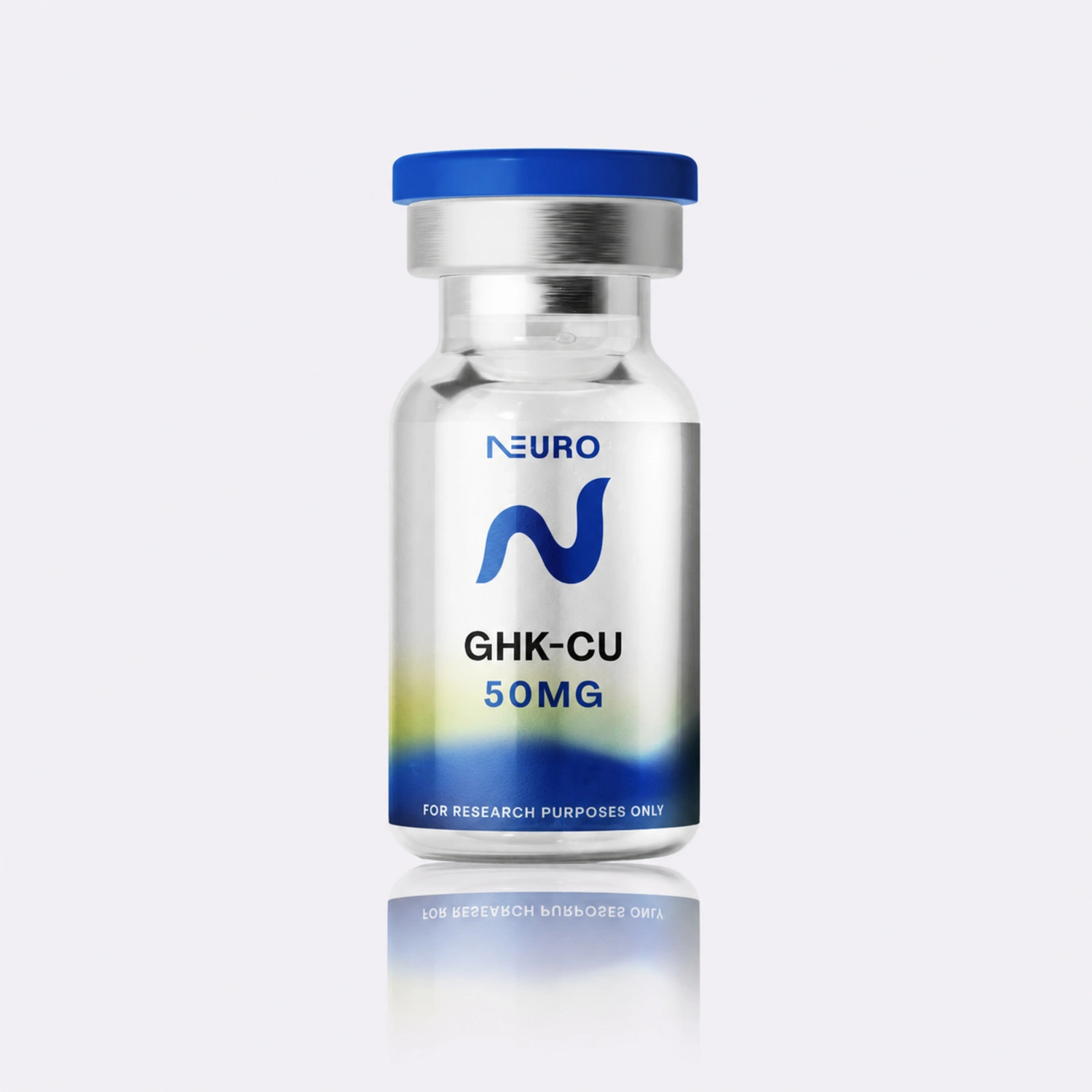
Note: The GHK-CU 50mg and 100mg available for sale at Neuro Peptides are strictly for research purposes.
How Does GHK-Cu Work?
The biological activity of GHK-Cu appears to involve several interconnected mechanisms rather than one single pathway.
One important property is its ability to bind and transport copper. Copper acts as a cofactor for several enzymes involved in connective tissue biology, including lysyl oxidase, which contributes to the cross-linking of collagen and elastin.
GHK-Cu has also been investigated for its influence on extracellular matrix turnover. Laboratory studies indicate that it can affect the production of matrix components while also modifying enzymes involved in matrix remodeling.
For example, the paper “The Tripeptide-Copper Complex Glycyl-L-Histidyl-L-Lysine-Cu2+ Stimulates Matrix Metalloproteinase-2 Expression by Fibroblast Cultures” reported increased MMP-2 expression in cultured fibroblasts along with changes in TIMP-1 and TIMP-2 secretion. These findings suggest that GHK-Cu may participate in both extracellular matrix formation and remodeling.
Research has also associated GHK and GHK-Cu with changes in gene expression related to inflammation, antioxidant defense, tissue remodeling, and cellular stress responses.
GHK-Cu Research Applications
GHK-Cu and Fibroblast Research
One of the most established areas of GHK-Cu research involves fibroblasts and extracellular matrix biology.
Fibroblasts play an important role in producing collagen, elastin, glycosaminoglycans, and other structural components of connective tissue.
In the study “Stimulation of Sulfated Glycosaminoglycan Synthesis by the Tripeptide-Copper Complex Glycyl-L-Histidyl-L-Lysine-Cu2+,” researchers examined normal human fibroblasts in culture. GHK-Cu produced a concentration-dependent increase in several glycosaminoglycans, including dermatan sulfate and heparan sulfate.
These findings have contributed to continued research into GHK-Cu peptide activity in extracellular matrix organization and fibroblast signaling.
GHK-Cu and Extracellular Matrix Remodeling
GHK-Cu has been studied for its effects on collagen and other connective tissue components.
The paper “In Vivo Stimulation of Connective Tissue Accumulation by the Tripeptide-Copper Complex Glycyl-L-Histidyl-L-Lysine-Cu2+ in Rat Experimental Wounds” investigated GHK-Cu in an experimental rat model.
Researchers reported increases in collagen, total protein, DNA, and glycosaminoglycan accumulation within the experimental tissue environment. Expression of type I and type III collagen mRNA was also increased.
This study is frequently cited in research examining the relationship between copper peptides and extracellular matrix activity.
GHK-Cu and Gene Expression
GHK has also been investigated for its ability to influence gene-expression patterns.
The review “Regenerative and Protective Actions of the GHK-Cu Peptide in the Light of the New Gene Data” discusses gene-expression data suggesting that GHK may influence multiple biological pathways associated with tissue remodeling, inflammatory signaling, oxidative stress, DNA repair, and cellular maintenance.
This broad interaction with gene expression is one reason GHK-Cu continues to attract attention beyond conventional connective tissue research.
GHK-Cu and Nervous System Research
GHK has also been examined in experimental research involving nervous system function and age-associated changes in gene expression.
The paper “The Effect of the Human Peptide GHK on Gene Expression Relevant to Nervous System Function and Cognitive Decline” evaluated gene-expression data associated with neurological function. The authors identified changes in genes connected with neuronal development, inflammatory signaling, and pathways relevant to nervous-system maintenance.
More recent animal research has extended this area of investigation. In “Intranasal GHK Peptide Enhances Resilience to Cognitive Decline in Aging Mice,” aged mice exposed to GHK-Cu demonstrated changes in cognitive-performance measures as well as neuroinflammatory and axonal-damage markers. These results remain preclinical and should not be interpreted as evidence of a therapeutic effect in humans.
GHK-Cu and Pulmonary Fibrosis Research
GHK has been studied in experimental models of pulmonary fibrosis.
The study “GHK Peptide Inhibits Bleomycin-Induced Pulmonary Fibrosis in Mice by Suppressing TGFβ1/Smad-Mediated Epithelial-to-Mesenchymal Transition” investigated the peptide in a bleomycin-induced mouse model of pulmonary fibrosis.
Researchers reported reductions in inflammatory cell infiltration, collagen deposition, TNF-α, IL-6, and several signaling markers associated with TGF-β1/Smad activity. The findings suggested that GHK influenced pathways involved in inflammation, extracellular matrix deposition, and epithelial-to-mesenchymal transition in this animal model.
These findings are preclinical and relate specifically to an experimental mouse model.
GHK-Cu and Oxidative Stress
The copper-binding properties of GHK-Cu have also been investigated in relation to oxidative processes.
In “Effects of Glycyl-Histidyl-Lysyl Chelated Cu(II) on Ferritin Dependent Lipid Peroxidation,” researchers found that GHK-Cu inhibited ferritin-dependent lipid peroxidation under the experimental conditions studied.
The proposed mechanism involved limiting the release of iron from ferritin rather than functioning as a conventional superoxide-dismutase-like antioxidant.
This provides another research pathway through which GHK-Cu may influence cellular responses to oxidative stress.
GHK-Cu and Antimicrobial Research
GHK-Cu is also being investigated as part of experimental antimicrobial and biomaterial systems.
For example, the study “Tripeptides GHK and GHKCu-Modified Silver Nanoparticles for Enhanced Antibacterial and Wound Healing Activities” evaluated silver nanoparticles modified with GHK or GHK-Cu. The experimental materials demonstrated antibacterial activity and influenced cell migration and tissue-related endpoints in laboratory and animal models.
More recent research has explored GHK-Cu incorporated into hydrogels and other delivery systems, reflecting continued interest in copper peptides as components of experimental biomaterials.
GHK and Pain-Related Research
GHK has also been evaluated in animal models involving pain-related behavioral responses.
The paper “Effects of Tripeptide Gly-His-Lys in Pain-Induced Aggressive-Defensive Behavior in Rats” examined GHK in a rat model using pain-induced aggressive-defensive behavior.
The researchers reported analgesic and anti-aggressive behavioral effects under the experimental conditions and investigated the possible contribution of the peptide’s lysine residue.
This research involved GHK rather than establishing GHK-Cu as an analgesic and should be interpreted strictly as preclinical evidence.
Frequently Asked Questions
What is GHK-Cu peptide?
GHK-Cu is a copper complex of the naturally occurring tripeptide glycyl-L-histidyl-L-lysine. It is widely studied in laboratory research involving fibroblast activity, extracellular matrix remodeling, collagen-related pathways, oxidative stress, and cellular signaling.
Does GHK-Cu contain copper?
Yes. GHK-Cu refers specifically to GHK bound to a copper ion, generally Cu(II). The copper-binding property is an important part of its molecular and biological behavior.
What is the difference between GHK and GHK-Cu?
GHK is the three-amino-acid peptide glycine-histidine-lysine. GHK-Cu is the complex formed when this peptide binds a copper ion. Some scientific papers study free GHK, while others specifically investigate its copper-bound form.
What is GHK-Cu mainly studied for?
GHK-Cu is studied in areas including extracellular matrix remodeling, fibroblast signaling, collagen-related pathways, glycosaminoglycan synthesis, oxidative stress, inflammatory signaling, and gene expression.
Is GHK-Cu a copper peptide?
Yes. GHK-Cu is one of the best-known copper-binding peptides and is commonly referred to as a copper peptide in scientific literature.
Is GHK-Cu third-party tested?
Yes. Our GHK-Cu research peptide is third-party tested for relevant quality and purity specifications. Batch-specific testing documentation should be reviewed before laboratory use.
Is a Certificate of Analysis available for GHK-Cu?
Yes. A Certificate of Analysis (COA) is available for GHK-Cu. The COA provides batch-specific analytical information and relevant purity data.
How should GHK-Cu be handled in laboratory research?
GHK-Cu should be handled according to appropriate laboratory protocols and the requirements of the specific experimental design. Researchers should review the available product documentation and COA before beginning experimental work.
GHK-Cu Research Disclaimer
GHK-Cu supplied by Neuro Peptides is intended strictly for laboratory and scientific research. It is not intended for human or veterinary use, consumption, diagnosis, treatment, or any other clinical application.
References
- Pickart L, Margolina A. “Regenerative and Protective Actions of the GHK-Cu Peptide in the Light of the New Gene Data.” International Journal of Molecular Sciences. 2018;19(7):1987. DOI: 10.3390/ijms19071987.
- Pickart L, Vasquez-Soltero JM, Margolina A. “The Effect of the Human Peptide GHK on Gene Expression Relevant to Nervous System Function and Cognitive Decline.” Brain Sciences. 2017;7(2):20. DOI: 10.3390/brainsci7020020.
- Zhou XM, Wang GL, Wang XB, et al. “GHK Peptide Inhibits Bleomycin-Induced Pulmonary Fibrosis in Mice by Suppressing TGFβ1/Smad-Mediated Epithelial-to-Mesenchymal Transition.” Frontiers in Pharmacology. 2017;8:904. DOI: 10.3389/fphar.2017.00904.
- Sever’yanova LA, Dolgintsev ME. “Effects of Tripeptide Gly-His-Lys in Pain-Induced Aggressive-Defensive Behavior in Rats.” Bulletin of Experimental Biology and Medicine. 2017;164(2):140–143. DOI: 10.1007/s10517-017-3943-3.
- Maquart FX, Bellon G, Chaqour B, et al. “In Vivo Stimulation of Connective Tissue Accumulation by the Tripeptide-Copper Complex Glycyl-L-Histidyl-L-Lysine-Cu2+ in Rat Experimental Wounds.” Journal of Clinical Investigation. 1993. DOI: 10.1172/JCI116842.
- “Stimulation of Sulfated Glycosaminoglycan Synthesis by the Tripeptide-Copper Complex Glycyl-L-Histidyl-L-Lysine-Cu2+.” The study examined GHK-Cu-mediated glycosaminoglycan synthesis in cultured human fibroblasts.
- “The Tripeptide-Copper Complex Glycyl-L-Histidyl-L-Lysine-Cu2+ Stimulates Matrix Metalloproteinase-2 Expression by Fibroblast Cultures.” The study investigated GHK-Cu effects on MMP-2 and tissue inhibitors of metalloproteinases in fibroblasts.