
Buy Tirzepatide 20mg
Tirzepatide 20mg For Sale Tirzepatide 20mg is available at Neuro Peptides for laboratory and scientific research…
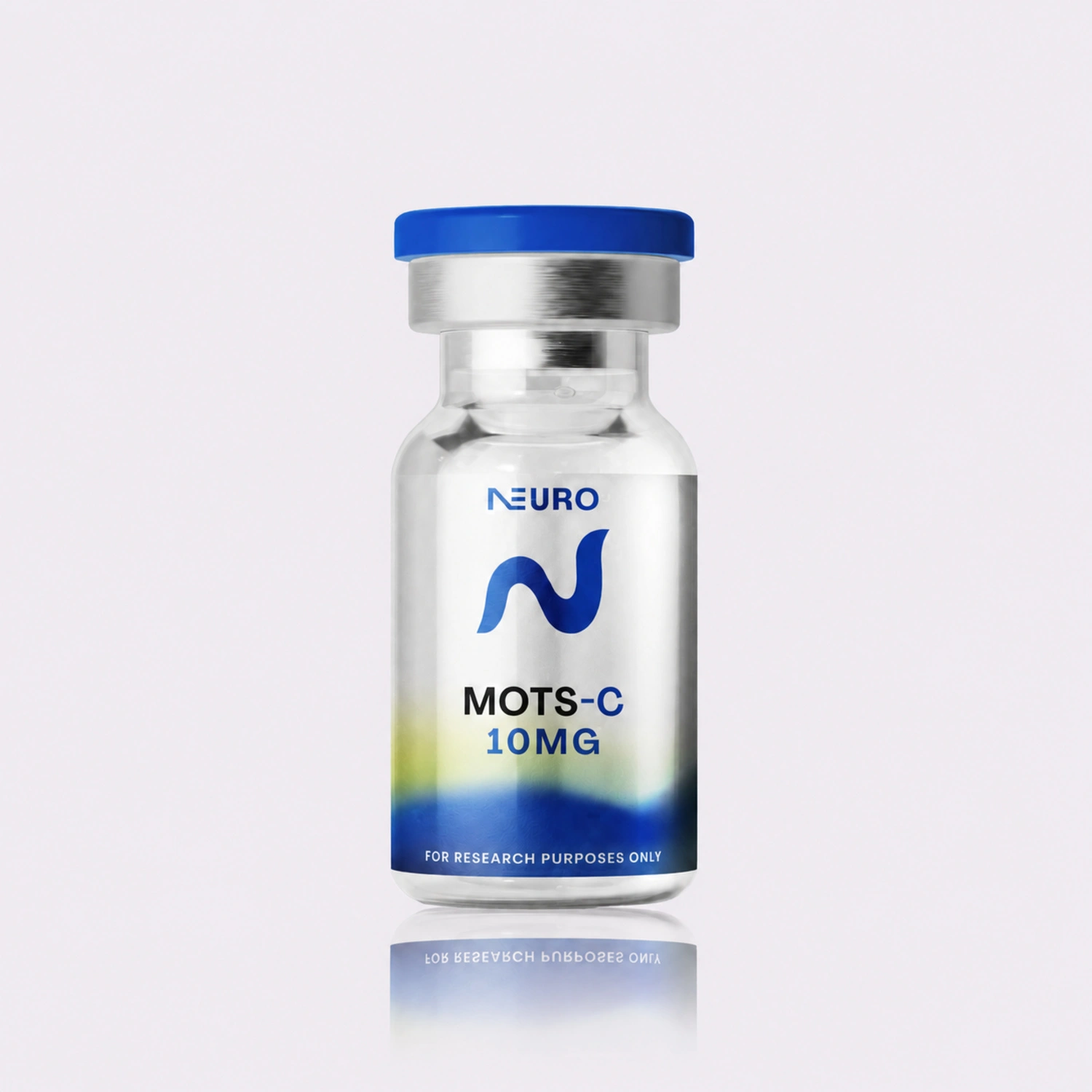
10 in stock
MOTS-C 10 mg is a research peptide supplied in lyophilized form for laboratory studies involving mitochondrial signaling, cellular metabolism, and mitochondria-to-nucleus communication. MOTS-C, short for Mitochondrial Open Reading Frame of the 12S rRNA Type-c, is a naturally occurring 16-amino-acid peptide encoded within mitochondrial DNA.
Unlike most peptides, which are encoded by nuclear DNA, MOTS-C belongs to a distinct group known as mitochondria-derived peptides (MDPs). These peptides have attracted scientific interest because of their potential role in communication between the mitochondria and the nucleus, helping researchers better understand how mitochondrial signals may influence broader cellular processes (Lee et al., 2015; Kim et al., 2018).
The discovery of MOTS-C has also expanded research into the role of mitochondria beyond their traditional association with cellular energy production. Experimental studies have investigated MOTS-C in relation to metabolic signaling, cellular stress responses, mitochondrial function, and adaptive cellular pathways.
At Neuro Peptides, MOTS-C 10 mg is available as a freeze-dried research material designed for controlled laboratory investigations. It may be used in experimental models studying mitochondrial biology, peptide signaling, metabolic pathways, and related molecular mechanisms.
Research into MOTS-C remains ongoing, and many aspects of its biological activity are still being investigated (Mohtashami et al., 2022; Zheng et al., 2023).
MOTS-C 10 mg is intended strictly for laboratory and research use only. It is not intended for human or animal consumption, diagnostic use, therapeutic use, or the prevention or treatment of any disease.
MOTS-C has gained scientific interest because it is produced within the mitochondria and appears to be involved in several processes linked to cellular energy balance and metabolic signaling. Rather than acting through only one pathway, MOTS-C is being studied for its broader role in how cells respond to changes in energy demand and metabolic stress (Mohtashami et al., 2022).
Experimental research has explored the possible involvement of MOTS-C in glucose metabolism, lipid metabolism, mitochondrial adaptation, and cellular stress responses. Researchers are also studying how this peptide may influence cellular adjustments during conditions such as reduced nutrient availability and physical activity (Wan et al., 2023; Zheng et al., 2023).
These properties make MOTS-C an interesting research compound for scientists studying mitochondrial biology, metabolic signaling, energy regulation, and cellular adaptation. However, research is still developing, and more laboratory studies are needed to fully understand its mechanisms and biological effects.
The coding sequence for MOTS-c is found in the 12S ribosomal RNA gene of mitochondrial DNA and is the first example of an active biological peptide identified from the mitochondrial genome. The discovery of MOTS-c contradicted the conventional belief of the use of mitochondrial DNA for energy generation and showed that it was also important for regulating cellular signaling and metabolism (Lee et al., 2015).
One of the most important characteristics of MOTS-c is that it can be transported from mitochondria to the nucleus under stress conditions. When it reaches the nucleus, it regulates the activity of transcription factors that regulate the genes responsible for antioxidant, inflammatory, and metabolic responses of cells (Kim et al., 2018).
The experimental data show that MOTS-c exerts its effects on AMP-activated protein kinase (AMPK), which is a key regulator of the cell’s energy homeostasis. Activation of AMPK leads to the upregulation of glucose uptake, fat oxidation, and mitochondrial adaptation under the increased need for energy. AMPK continues to be one of the best-studied pathways linked to the biology of MOTS-c, even when several studies have been done in other pathways as well (Lee et al., 2015; Wan et al., 2023).
The scientific basis of the MOTS-c study is the coordination of mitochondrial signals with the expression of nuclear genes. Unlike other hormones, MOTS-c affects multiple adaptive processes such as energy metabolism, oxidative stress, and cell tolerance. Studies show that MOTS-c is related to an improvement in glucose metabolism, better functioning of mitochondria, and metabolic adaptations. Additional research has been done to explore the possible involvement of MOTS-c in metabolic disorders, exercise physiology, and aging studies. However, despite the existing evidence gained from preclinical studies, it is necessary to conduct further research in humans.
Among the main directions in MOTS-c studies is metabolic health. According to experimental data, MOTS-c can affect glucose metabolism, increase insulin sensitivity, and promote lipid metabolism via stimulation of cellular adaptation mechanisms under metabolic stress. This evidence has attracted attention to further studies of MOTS-c as a prospective target for obesity, insulin resistance, and type 2 diabetes.
The physical activity triggers the changes in mitochondrial adaptation and metabolism. It is believed that the endogenous levels of MOTS-c could be increased by means of physical activity, as it plays an essential role in metabolic changes caused by the physical activity. Nowadays, scientists aim at discovering the mechanism through which MOTS-c affects metabolism and energy adaptation in the skeletal muscles.
Abnormal mitochondrial function is related to reduced energy production and increased oxidative stress in the aging population. Considering the role of MOTS-c in the response to mitochondrial stress, it has become an important protein for studying aging. Experimental studies have found that normal MOTS-c function may be vital for maintaining metabolic flexibility in the process of aging, but its clinical importance remains to be determined.
Some significant achievements in research in the area of mitonuclear communication have been realized due to the discovery of MOTS-c, which falls under the category of the study of nuclear gene expression regulation by mitochondria. The scope of mitonuclear communication goes much further than the realm of metabolism, as it may contribute to understanding of cell adaptation, oxidative stress control, and mitochondrial disorders (Kim et al., 2018; Zheng et al., 2023).
Yes, our MOTS-C 10mg is third-party tested as part of our research-product quality process.
Analytical testing is important because different techniques answer different questions about a peptide.
HPLC can provide information about the composition of a sample and its reported purity.
Mass spectrometry can provide molecular-mass information that helps support the identity of the peptide.
We believe researchers should be able to review analytical documentation rather than relying only on claims written on a product page.
However, laboratory testing does not mean that MOTS-C has been proven safe or effective for medical use. These tests are used to characterize research material.
Yes, at Neuro Peptides, we provide a Certificate of Analysis for our MOTS-C 10mg.
Researchers can review the COA section on the product page or contact us to request the most recent certificate before purchasing.
When reviewing a MOTS-C COA, we recommend checking details such as:
Yes, if you want to review the documentation first, you can contact our research desk and request the current COA for MOTS-C.
When making the request, include the product name and ask for the most recent available certificate.
This gives researchers an opportunity to examine the analytical information before placing an order.
The lowest-priced research material is not automatically the best fit for every laboratory workflow.
We normally process and ship qualifying research orders within 1–2 business days.
Actual delivery time after dispatch can vary based on the destination, carrier service, weekends, holidays, and other shipping conditions.
Researchers working with a strict laboratory schedule should place orders early enough to account for both processing and carrier transit time.
No. MOTS-C is not an FDA-approved drug.
This distinction is important.
In July 2026, the FDA Pharmacy Compounding Advisory Committee reviewed MOTS-C-related bulk drug substances, including MOTS-C free base and MOTS-C acetate, as substances nominated for consideration for the 503A Bulks List.
The FDA evaluated nominated uses involving obesity and osteoporosis.
That review did not mean MOTS-C received FDA approval.
FDA materials also identify major gaps in available safety information and state that the agency has not identified human exposure data for drug products containing MOTS-C administered by any route.
Therefore, MOTS-C sold by Neuro Peptides should be understood exactly as it is labeled: a research material for laboratory use, not an approved pharmaceutical product.
Before purchasing MOTS-C from any research supplier, we recommend checking a few important details.
Look for clear information about:
Transparent documentation makes it easier for laboratories to evaluate the research material before incorporating it into their workflow.
The product MOTS-C 10 mg is normally available as a highly purified lyophilized form of peptide for scientific studies. Scientists prefer to use high-quality forms of the peptides to achieve consistency, purity, and reproducibility in experiments. Appropriate storage conditions must be guaranteed for the storage of the peptides. Lyophilized peptides are usually stored under refrigeration or freezing until dissolution, and solutions of the peptides are handled in accordance with laboratory protocol.
It must be noted that MOTS-C 10 mg is designed for use only in scientific research. It cannot be used as a pharmaceutical drug in human patients and still undergoes scientific research on its biological action.
MOTS-c safety data available at the moment come mainly from experiments and a few human studies. The safety of MOTS-c appears to be good in research environments; however, the information concerning long-term safety, pharmacokinetic parameters, and the ideal doses is not yet sufficient.
As a candidate drug, MOTS-c must be studied in appropriate scientific studies. More randomized clinical trials have to be performed for the evaluation of MOTS-c safety and efficacy in clinical practice (Mohtashami et al., 2022; Zheng et al., 2023).
Despite the considerable progress in MOTS-c research in the last ten years, there are some limitations present:
All these limitations show that further study of MOTS-c is necessary, taking into account the fact that MOTS-c is still an experimental research peptide (Wan et al., 2023).
You can purchase MOTS-C 10mg from Neuro Peptides for $105 per vial. The product is supplied strictly for laboratory and analytical research.
Yes. Our MOTS-C research material is third-party tested, with analytical documentation available through its COA.
Yes. Researchers can request the most recent MOTS-C COA from our research desk before ordering.
MOTS-C is a 16-amino-acid mitochondrial-derived peptide encoded within a short open reading frame associated with mitochondrial 12S rRNA.
Its mitochondrial origin makes it unusual. Most peptides are encoded by nuclear DNA, while MOTS-C is encoded within mitochondrial DNA.
The 10 mg product is supplied for laboratory research. Published studies have investigated MOTS-C in mitochondrial signaling, metabolic regulation, AMPK signaling, cellular stress, skeletal muscle biology, exercise, and mitonuclear communication.
MOTS-C 10 mg is a novel mitochondria-derived research peptide that has gained considerable attention in the fields of metabolic science, exercise physiology, and healthy aging. With the capacity to influence mitochondrial-nuclear cross-talk and metabolism, MOTS-C 10 mg has become one of the most interesting mitochondria-derived signaling peptides ever discovered.
While preclinical data continues to point towards its biological importance, human data is rather lacking. Well-conducted human trials are required to fully understand its therapeutic properties, dosage recommendations, and safety profile. In the meantime, MOTS-C 10 mg remains an extremely useful research peptide for further scientific investigation.
Certificate of Analysis
Storage guidelines
Store at -20°C or -4°F or below Keep in freezer for optimal stability Maintain consistently frozen temperature Can remain stable for extended periods
Refrigerate immediately at 2–8°C Equivalent to 35.6–46.4°F temperature range Store in main refrigerator compartment Do not store in refrigerator door
Avoid freeze-thaw cycles completely Each cycle degrades peptide structure Thaw only what you need immediately Never refreeze thawed aliquots
Allow vials to reach room temperature before opening Prevents condensation from forming inside container Reduces moisture uptake significantly Wait 15-20 minutes before opening
Chemical properties

Tirzepatide 20mg For Sale Tirzepatide 20mg is available at Neuro Peptides for laboratory and scientific research…
$ 104 / vial
View Details → Buy Tirzepatide 20mg
Buy Retatrutide 20mg Retatrutide (LY3437943) is an investigational peptide developed by Eli Lilly. It has attracted…
$ 145 / vial
View Details → Buy Retatrutide 20mg
Retatrutide 10mg For Sale Retatrutide (LY3437943) is an investigational peptide originally developed by Eli Lilly. It…
$ 80 / vial
View Details → Buy Retatrutide 10mg
Thymosin Alpha-1 5mg For Sale Researchers looking to buy Thymosin Alpha-1 5mg can find research-grade, third-party…
$ 36 / vial
View Details → Buy Thymosin Alpha-1 5mg