Tesamorelin 10mg For Sale
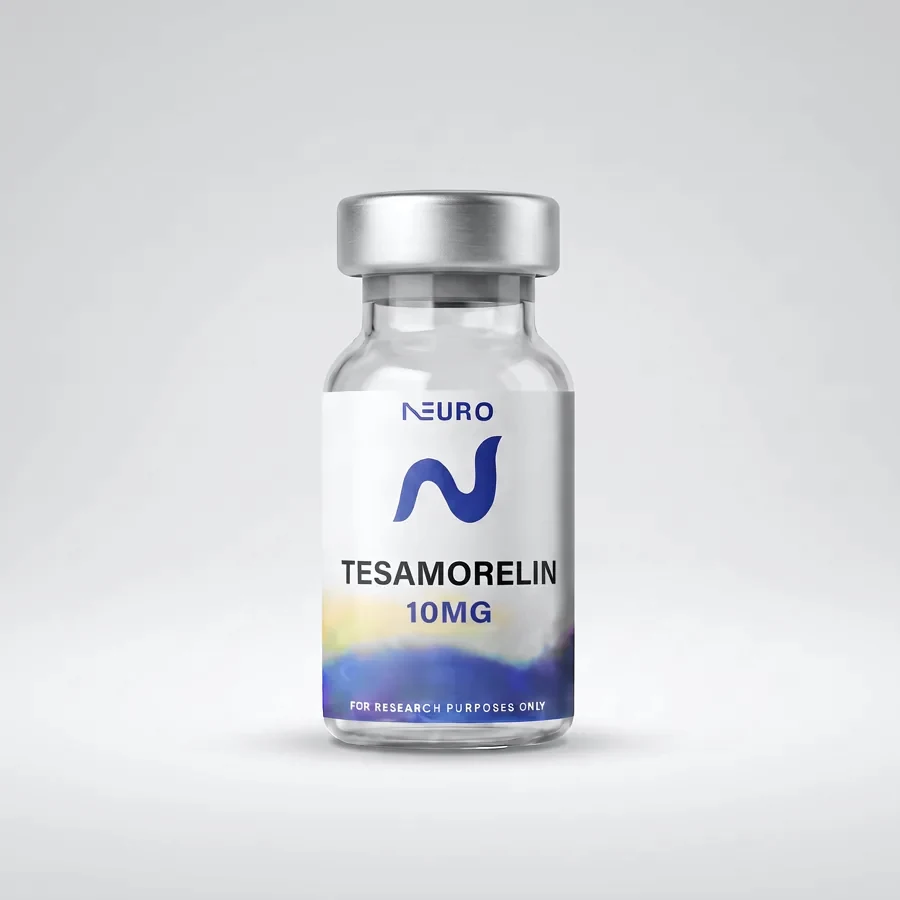
Tesamorelin 10mg is a research-grade peptide supplied as a lyophilized powder for laboratory studies. It is a synthetic analog of growth hormone-releasing hormone (GHRH) and interacts with GHRH receptors involved in growth hormone signaling.
Researchers can buy Tesamorelin 10mg at Neuro Peptides for research purposes. Tesamorelin is commonly studied in areas such as endocrinology, peptide pharmacology, metabolism, and molecular biology.
Tesamorelin 10mg can be used in research involving GHRH receptor activation, growth hormone secretion, insulin-like growth factor-1 (IGF-1) signaling, and metabolic pathways. Each vial is intended strictly for laboratory research and is not for human or veterinary use.
Tesamorelin Specifications
| Specification |
Details |
| Full Name |
Tesamorelin Acetate |
| Peptide Sequence |
(trans-3-hexenoyl)-Tyr-Ala-Asp-Ala-Ile-Phe-Thr-Asn-Ser-Tyr-Arg-Lys-Val-Leu-Gly-Gln-Leu-Ser-Ala-Arg-Lys-Leu-Leu-Gln-Asp-Ile-Met-Ser-Arg-Gln-Gln-Gly-Glu-Ser-Asn-Gln-Glu-Arg-Gly-Ala-Arg-Ala-Arg-Leu-NH₂ |
| CAS Number |
218949-48-5 |
| PubChem CID |
16137828 |
| Molecular Weight |
5135.9 g/mol |
| Molecular Formula |
C₂₂₁H₃₆₆N₇₂O₆₇S |
| Appearance |
White to off-white lyophilized powder |
Tesamorelin Structure
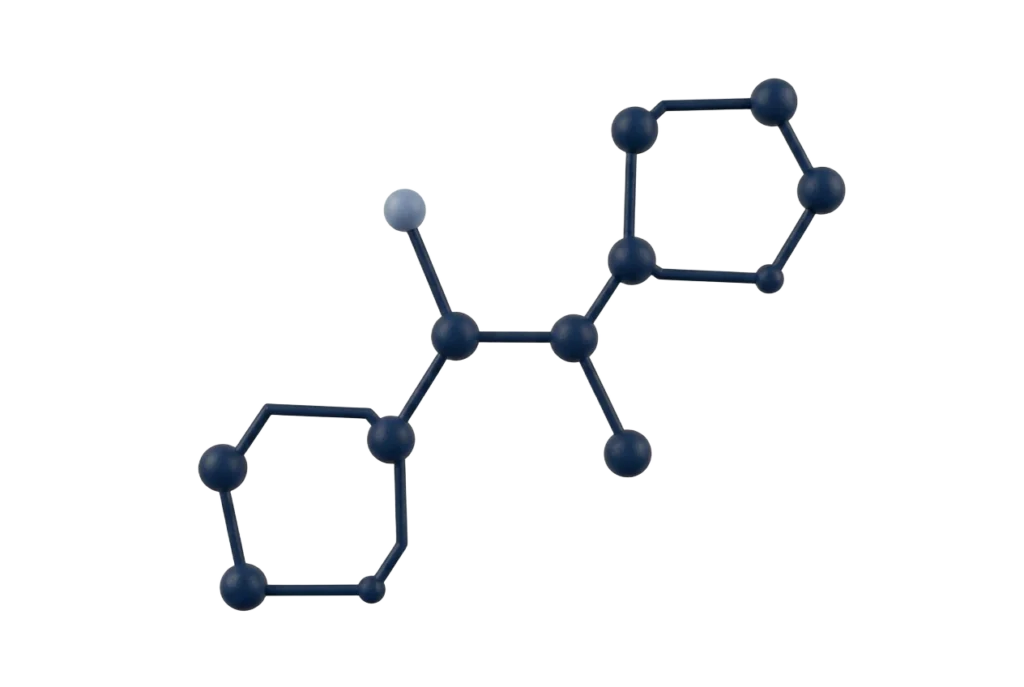
Tesamorelin is a synthetic 44-amino-acid analogue of human growth hormone-releasing hormone (GHRH). Its structure includes an N-terminal trans-3-hexenoyl modification designed to improve stability relative to endogenous GHRH. The peptide retains activity at the GHRH receptor and stimulates downstream growth hormone signaling.
Tesamorelin: Mechanism of Action
Tesamorelin is still being studied by researchers in relation to how it interacts with growth hormone-releasing hormone receptors and signaling mechanisms within endocrine and metabolic pathways. According to experimental studies, Tesamorelin acts as a selective GHRH receptor agonist, which makes it useful for understanding the physiology of growth hormone and the associated signaling pathways.
1. Growth Hormone-Releasing Hormone (GHRH) Receptor Activation
Extensive research has been conducted to study the binding properties of tesamorelin, which selectively binds to GHRH receptors present on the anterior pituitary somatotroph cells. In vitro experiments involve examining the mechanism by which receptor activation leads to intracellular signal transduction for the physiological secretion of growth hormone.
2. Growth Hormone and IGF-1 Signaling
Experimental studies indicate that Tesamorelin is extensively used to study the link between growth hormone release and IGF-1 signaling. Researchers still try to understand the mechanisms through which these related processes control cellular proliferation, protein metabolism, tissue physiology, and endocrine regulation within the laboratory setting.
3. Metabolic and Cellular Research
Present studies employ Tesamorelin for examining the regulation of metabolism through peptides, cell signaling, and cellular communication. Investigations are being conducted to understand its effects on the molecular mechanisms related to lipid metabolism, energy balance, and endocrinology.
Tesamorelin : Research Applications
Tesamorelin 10mg is used for numerous scientific studies in such fields as:
Endocrinology: growth hormone research, GHRH receptor signaling, and endocrine regulation.
Molecular biology: intracellular signaling pathway research and cell communication by peptides.
Metabolic studies: metabolism of lipids, energy balance, and metabolic homeostasis.
Cell biology: cell response to hormones and biological actions via receptors.
Pharmacology of GHRH analogs: GHRH receptor specificity and peptide receptor interactions.
Biochemistry: protein signaling, endocrine signaling pathways, and peptide mechanism of action.
Storage Instructions
The storage process is critical for maintaining the purity, stability, and biological activity of Tesamorelin 10mg in all research experiments.
1. Storage Recommendations of Lyophilized Powder:
Unopened bottles of Tesamorelin (or any other peptides) generally should be stored at temperatures lower than -20°C. In case the bottle remains closed, it can also be stored at 2–8°C for 12 months. The lyophilized powder needs to be protected from direct sunlight, high humidity levels, and frequent changes of temperature.
2. Storage Recommendations of Reconstituted Solution:
Upon reconstitution, the reconstituted solution should be stored in a lab refrigerator at 2–8°C. Researchers are required to use aseptic technique while preparing the solution.
FAQs
Q1. What is Tesamorelin 10mg used for?
Tesamorelin 10mg is popularly used in laboratory studies to study the effects of growth hormone-releasing hormone (GHRH) receptor activation, growth hormone release, IGF-1 action, physiology of the endocrine system, and metabolic actions of peptides.
Q2. Which type of peptide is Tesamorelin?
Tesamorelin is an analog of the growth hormone-releasing hormone (GHRH). The particular peptide is made synthetically for the purpose of activating the receptors of GHRH and is frequently used for the study of the physiology of the endocrine system.
Q3. How should Tesamorelin 10mg be stored?
Store unopened lyophilized vials at -20°C or below for long-term storage. If unopened, the peptide may also be refrigerated at 2–8°C for up to 12 months. After reconstitution, store the solution at 2–8°C and avoid repeated freeze-thaw cycles.
Q5. In which areas of study is Tesamorelin usually utilized?
The primary areas of study in which Tesamorelin is used are: endocrinology, pharmacology of peptides, molecular biology, metabolic studies, cell biology, and growth hormone signaling pathway studies.
Q6. Is Tesamorelin 10mg third-party tested?
Yes. Neuro Peptides provides third-party tested Tesamorelin 10mg to ensure product purity, identity, and quality. Researchers can review the available batch-specific testing documentation to verify the product’s analytical results.
Q7. Is a Certificate of Analysis (COA) available for Tesamorelin 10mg?
Yes. Neuro Peptides provides a Certificate of Analysis (COA) for Tesamorelin 10mg. Researchers can review the COA to verify the peptide’s identity, purity, and batch-specific testing results before purchasing.
Q8. What is the purity of Tesamorelin 10mg?
The purity of Tesamorelin 10mg should be determined through analytical testing, such as high-performance liquid chromatography (HPLC). Researchers should refer to the batch-specific Certificate of Analysis to verify the reported purity percentage and other relevant analytical results.
Q9. What is the difference between Tesamorelin and Sermorelin?
Both Tesamorelin and Sermorelin are synthetic analogs of growth hormone-releasing hormone (GHRH), but they differ in their molecular structures.
Tesamorelin is a modified analog of full-length human GHRH, whereas Sermorelin contains the first 29 amino acids of human GHRH. Both peptides are investigated for their interactions with GHRH receptors and their effects on growth hormone signaling.
Q10. What form does Tesamorelin 10mg come in?
Neuro Peptides supplies Tesamorelin 10mg as a lyophilized powder in a sealed laboratory vial. Lyophilization removes water from the formulation under controlled conditions, producing a dry preparation suitable for storage under the manufacturer’s specified conditions.
Final Thoughts
Tesamorelin 10mg is a research-grade peptide used in laboratory studies involving GHRH receptor activity, growth hormone signaling, IGF-1 pathways, and metabolic processes. Its specific activity at GHRH receptors makes it useful for research in endocrinology, peptide pharmacology, and molecular biology.
Each vial is produced under strict quality control standards and is intended for laboratory research only. Not for human or veterinary use.
Research Disclaimer
Regulatory Status: Tesamorelin is the active ingredient in FDA-approved prescription products for a specific medical indication. Neuro Peptides Tesamorelin 10mg is sold solely as a research material and is not an FDA-approved pharmaceutical product or intended for human use.
References
- Falutz, J., Allas, S., Blot, K., Potvin, D., Kotler, D., Somero, M., … & Grinspoon, S. (2007). Metabolic effects of a growth hormone–releasing factor in patients with HIV. New England Journal of Medicine, 357(23), 2359-2370.
- Stanley, T. L., Feldpausch, M. N., Oh, J., Branch, K. L., Lee, H., Torriani, M., & Grinspoon, S. K. (2014). Effect of tesamorelin on visceral fat and liver fat in HIV-infected patients with abdominal fat accumulation: a randomized clinical trial. Jama, 312(4), 380-389.
- National Center for Biotechnology Information (NCBI). PubChem Compound Summary for Tesamorelin.