Melanotan II 10mg For Sale
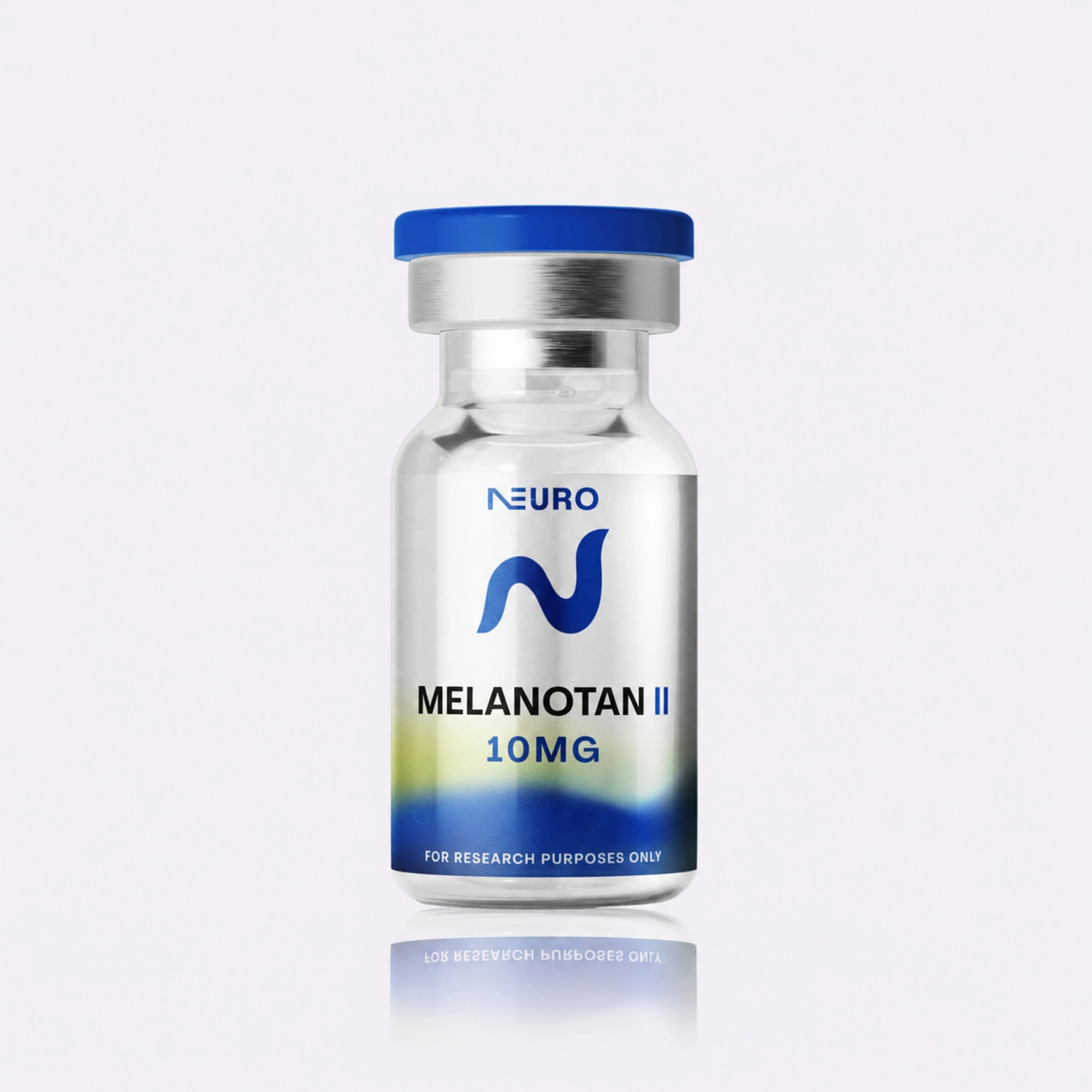
Melanotan II 10mg is a research-grade synthetic peptide supplied by Neuro Peptides as a lyophilized powder for laboratory studies. Also known as MT-II, Melanotan II is a cyclic analogue of alpha-melanocyte-stimulating hormone (α-MSH).
Melanotan II is studied for its activity at several melanocortin receptors, including MC1R, MC3R, MC4R, and MC5R. These receptors are involved in pathways related to pigmentation, melanocortin signaling, neuroendocrine activity, and peptide-receptor interactions.
Researchers use Melanotan II in laboratory studies involving melanogenesis, receptor signaling, peptide pharmacology, and neuroendocrine pathways.
Researchers can buy Melanotan II 10mg from Neuro Peptides for laboratory research purposes only. The product is supplied as a lyophilized research material and is not intended for human or veterinary use.
Melanotan II Specifications
| Specification |
Details |
| Full Name |
Melanotan II |
| Common Abbreviation |
MT-II |
| Peptide Sequence |
Ac-Nle-cyclo[Asp-His-D-Phe-Arg-Trp-Lys]-NH₂ |
| CAS Number |
121062-08-6 |
| PubChem CID |
92432 |
| Molecular Formula |
C₅₀H₆₉N₁₅O₉ |
| Molecular Weight |
1024.2 g/mol |
| Exact Mass |
1023.5403 Da |
| Peptide Type |
Synthetic cyclic heptapeptide |
| Appearance |
White to off-white lyophilized powder* |
Melanotan II Mechanism of Action
Melanotan II acts as an agonist at several melanocortin receptors, including MC1R, MC3R, MC4R, and MC5R. By binding to these receptors, it activates intracellular signaling pathways that researchers study in relation to pigmentation, metabolic signaling, and neuroendocrine function.
1. Melanocortin Receptor Binding
Melanotan II binds to multiple melanocortin receptor subtypes rather than acting on a single receptor. Researchers use this activity to study receptor selectivity, ligand-receptor interactions, and downstream signaling within the melanocortin system.
2. Melanogenesis Signaling
One of the best-known research areas involving Melanotan II is melanogenesis, the biological process responsible for melanin production. Activation of the MC1 receptor on melanocytes can stimulate signaling pathways involved in melanin synthesis and pigment regulation.
Researchers study these pathways to better understand how melanocortin receptor activation influences pigment-producing cells.
3. Neuroendocrine Research
Melanocortin receptors are also found in the central nervous system and participate in several neuroendocrine signaling pathways. Melanotan II is therefore studied in research involving MC3R and MC4R signaling, receptor-mediated neural activity, and the broader role of melanocortins in physiological regulation.
These studies help researchers understand how melanocortin signaling can produce different biological responses depending on the receptor subtype and tissue involved.
Research Applications
| Research Area |
Melanotan II Research Application |
| Peptide Pharmacology |
Study of melanocortin receptor binding, receptor selectivity, ligand interactions, and agonist activity. |
| Molecular Biology |
Investigation of intracellular signaling pathways activated by melanocortin receptors. |
| Pigmentation Research |
Study of melanogenesis, melanin synthesis, melanocyte signaling, and MC1R-related pathways. |
| Neuroendocrinology |
Research into melanocortin-mediated neural and neuroendocrine signaling, particularly involving MC3R and MC4R. |
| Cell Biology |
Examination of receptor-mediated cellular signaling and downstream biological responses. |
| Biochemistry |
Study of melanocortin peptide structure, receptor interactions, and structure-activity relationships. |
Storage Instructions
Melanotan II 10mg should be stored under conditions that help protect the stability and integrity of the peptide.
Keep the product in a cool, dry place away from direct light, heat, and moisture. Lyophilized peptides are commonly stored under refrigerated or frozen laboratory conditions, depending on the manufacturer’s recommendations.
After reconstitution, the solution should be kept refrigerated and handled using appropriate laboratory practices to reduce the risk of contamination.
Avoid repeated temperature changes and unnecessary freeze-thaw cycles. Always follow the specific storage instructions provided with the product or batch documentation.
FAQs
Q1. What are the uses of Melanotan II 10mg?
Melanotan II 10mg is used extensively in laboratory studies to understand melanocortin receptor signaling, melanin formation, peptides and their receptors, neuroendocrine signaling, and cell signaling processes. Melanotan II 10mg is extensively used in peptide pharmacology, molecular biology, and pigmentation studies.
Q2. Which kind of peptide is Melanotan II?
Melanotan II is an artificial cyclic analog of α-melanocyte-stimulating hormone (α-MSH). Melanotan II works as an agonist of multiple types of melanocortin receptors. It can be considered a useful research peptide to understand the biology of receptors.
Q3. What is the method to reconstitute Melanotan II 10mg?
Scientists normally reconstitute the lyophilized form of the peptide with bacteriostatic water or saline under sterile laboratory conditions.
Q4. How should Melanotan II 10mg be stored?
Store unopened lyophilized vials at -20°C or below for long-term storage. If unopened, the peptide may also be refrigerated at 2–8°C for up to 12 months. After reconstitution, store the solution at 2–8°C and avoid repeated freeze-thaw cycles.
Q5. In what fields of study is Melanotan II commonly researched?
There have been various studies on Melanotan 2 including studies done in the fields of peptide pharmacology, molecular biology, melanogenesis, neuroendocrinology, Receptor Biology & Biochemistry. Different types of research have also been performed with respect to Melanotan II & its relation with melanocortin receptors
Q6. Is Melanotan II 10mg meant for human consumption?
No. Melanotan II 10mg produced by Neuro Peptide is available for experimental research only and is not for human consumption, medical use, diagnosis, or veterinary use.
Q7: Where Can I buy Melanotan 2 10mg ?
Researchers can now Melanotan II 10mg at Neuro Peptides.
Q8. Is Melanotan II 10mg third-party tested?
Yes. Melanotan II 10mg supplied by Neuro Peptides is third-party tested for identity, purity, and overall product quality. Researchers can review the available batch-specific testing information before use in laboratory studies.
Q9. Is a Certificate of Analysis (COA) available for Melanotan II 10mg?
Yes. Neuro Peptides provides a Certificate of Analysis (COA) for Melanotan II 10mg. The COA contains batch-specific analytical information that may include peptide identity, purity, and other relevant testing results.
Q10. What is the purity of Melanotan II 10mg?
The purity of Melanotan II 10mg is verified through analytical testing. Researchers should refer to the batch-specific COA for the exact reported purity level and testing results.
Q11. How can I verify the quality of Melanotan II 10mg?
Researchers can verify product quality by reviewing the batch-specific COA and third-party laboratory testing documentation provided by Neuro Peptides. These documents help confirm important specifications such as identity and purity.
Q12. Does each batch of Melanotan II 10mg have testing documentation?
Yes. Neuro Peptides provides batch-specific testing documentation for Melanotan II 10mg. Researchers should review the documentation associated with the specific batch they receive.
Q13. What form is Melanotan II 10mg supplied in?
Melanotan II 10mg is supplied as a lyophilized powder in a sealed research vial. This format is commonly used for peptide research because it allows the material to be stored and handled according to laboratory requirements.
Q14. Is Melanotan II 10mg suitable for laboratory research?
Yes. Melanotan II 10mg is supplied specifically for controlled laboratory research involving melanocortin receptor biology, melanogenesis, peptide pharmacology, and related molecular studies.
Q15. Can researchers request the Melanotan II 10mg COA before purchasing?
Yes. Researchers can request available product testing documentation, including the COA, from Neuro Peptides before placing an order or before using the material in laboratory research.
Q16. Why is third-party testing important for Melanotan II 10mg?
Third-party testing provides independent analytical information about the research material. It helps researchers evaluate important product characteristics such as identity, purity, and batch consistency before incorporating the peptide into experimental work.
Final Thoughts
Melanotan II 10mg remains a widely studied research peptide because of its activity at multiple melanocortin receptors. It is commonly used in laboratory studies involving melanogenesis, melanocortin signaling, neuroendocrine pathways, peptide-receptor interactions, and cellular signaling.
Neuro Peptides supplies Melanotan II 10mg as a lyophilized research material intended to support controlled laboratory studies. Each batch should be handled according to the accompanying product specifications and laboratory procedures to maintain stability and research integrity.
Melanotan II sold by Neuro Peptides is strictly for laboratory research purposes only. It is not intended for human or veterinary use.
References
- Hrubu, V. J., Lu, D., Sharma, S. D., de L. Castrucci, A., Kesterson, R. A., Al-Obeidi, F. A., … & Cone, R. D. (1995). Cyclic lactam. alpha.-melanotropin analogs of Ac-Nle4-cyclo [Asp5, D-Phe7, Lys10]-. alpha.-melanocyte-stimulating hormone-(4-10)-NH2 with bulky aromatic amino acids at position 7 show high antagonist potency and selectivity at specific melanocortin receptors. Journal of Medicinal Chemistry, 38(18), 3454-3461.
- Wikberg, J. E., Muceniece, R., Mandrika, I., Prusis, P., Lindblom, J., Post, C., & Skottner, A. (2000). New aspects on the melanocortins and their receptors. Pharmacological Research, 42(5), 393-420.
- Cone, R. D. (2006). Studies on the physiological functions of the melanocortin system. Endocrine Reviews, 27(7), 736-749.
- Hadley, M. E., Hruby, V. J., Jiang, J., Sharma, S. D., Fink, J. L., HASKELL‐LUEVANO, C. A. R. R. I. E., … & Sawyer, T. K. (1996). Melanocortin receptors: identification and characterization by melanotropic peptide agonists and antagonists. Pigment Cell Research, 9(5), 213-234.
- National Center for Biotechnology Information (NCBI). PubChem Compound Summary for Melanotan II.