
Buy Tirzepatide 20mg
Tirzepatide 20mg For Sale Tirzepatide 20mg is available at Neuro Peptides for laboratory and scientific research…
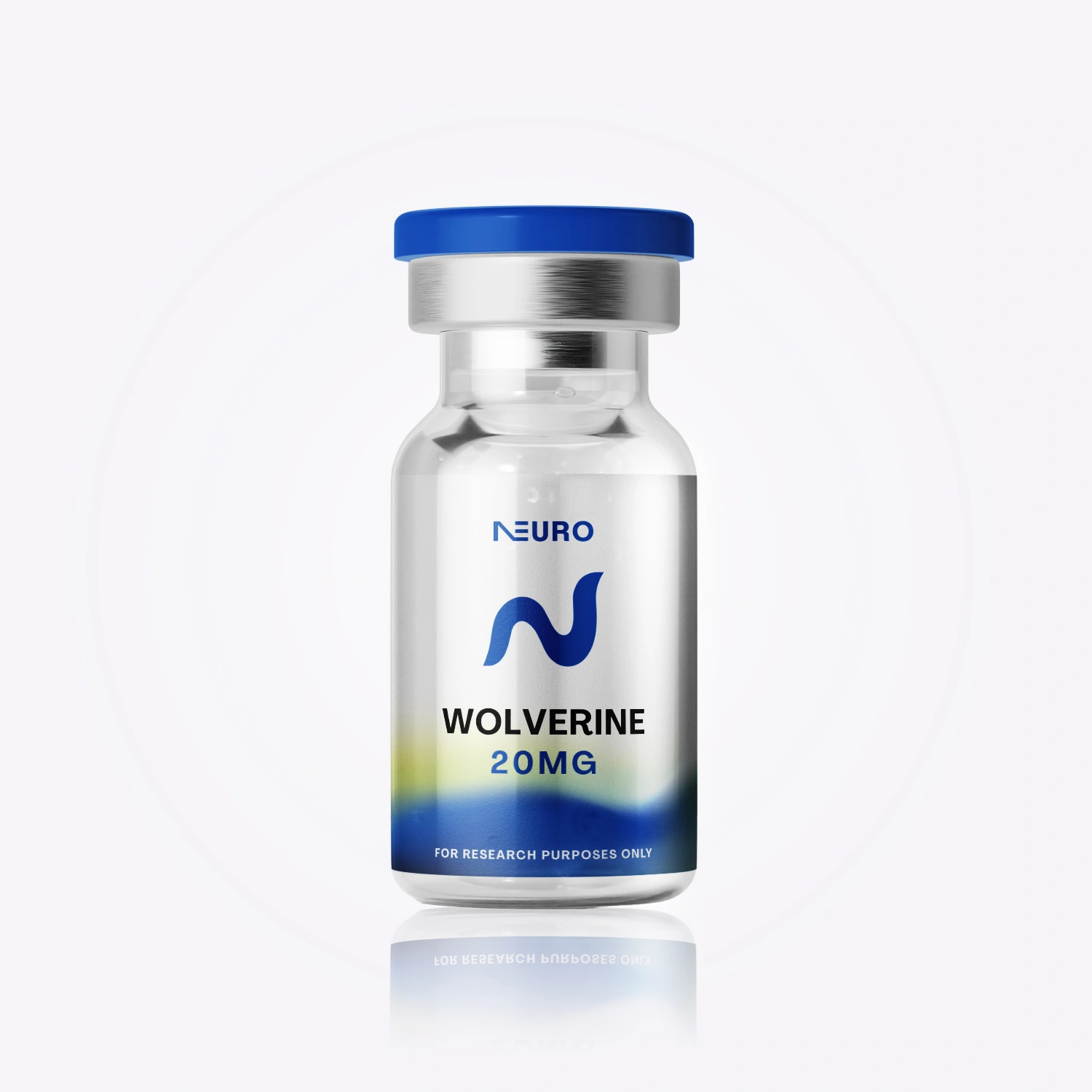
Wolverine 20mg is a research peptide blend combining BPC-157 and TB-500 in a single lyophilized formulation. Available at Neuro Peptides, this 20mg blend is designed for laboratory investigations involving cellular signaling, cell migration, angiogenesis, and extracellular matrix remodeling.
BPC-157 is a synthetic pentadecapeptide investigated in preclinical studies for its potential involvement in cellular responses to tissue injury, angiogenic signaling, and gastrointestinal tissue biology. TB-500 is a synthetic peptide associated with thymosin beta-4, a naturally occurring protein involved in actin regulation and cellular movement. Research involving thymosin beta-4 has explored its role in cell migration, cytoskeletal organization, and tissue repair mechanisms.
By combining BPC-157 and TB-500, Wolverine 20mg offers researchers an opportunity to investigate these peptide-associated biological pathways within a single experimental formulation. However, the effects of the combined peptides remain insufficiently characterized, and findings from studies of individual peptides should not be assumed to apply to the blend.
Neuro Peptides supplies Wolverine 20mg as a research-grade lyophilized powder for controlled laboratory investigations. This product is intended strictly for research purposes and is not approved or intended for human or animal use.
|
Specification |
Details |
|---|---|
|
Product Name |
Wolverine 20mg |
|
Peptide Composition |
BPC-157 + TB-500 |
|
Total Peptide Content |
20 mg per vial |
|
Individual Peptide Content |
BPC-157 10 mg + TB-500 10 mg |
|
Product Type |
Research Peptide Blend |
|
Formulation |
Lyophilized Powder |
|
Appearance |
White to off-white powder |
|
Grade |
Research Grade |
|
Purity |
Refer to the batch-specific Certificate of Analysis (COA) |
|
Packaging |
Sealed laboratory vial |
|
Research Applications |
Investigation of cellular signaling, cell migration, angiogenesis, and extracellular matrix remodeling |
|
Storage Conditions |
Follow the manufacturer’s validated storage instructions and batch-specific documentation |
|
Intended Use |
Laboratory Research Only |
|
Regulatory Status |
Not approved for human or veterinary therapeutic use |
Wolverine 20mg combines two research peptides, BPC-157 and TB-500, in a single lyophilized formulation. These peptides are investigated for their involvement in cellular signaling, angiogenesis, cytoskeletal regulation, and tissue remodeling.
BPC-157 has been studied in preclinical models involving vascular signaling and cellular responses to tissue injury. TB-500 is a synthetic peptide associated with thymosin beta-4, a naturally occurring peptide involved in actin regulation and cellular movement.
Although these research areas provide a scientific basis for investigating the two peptides together, the mechanism of action of the Wolverine BPC-157 and TB-500 blend has not been fully characterized.
BPC-157 is a synthetic peptide consisting of 15 amino acids. Its potential influence on vascular signaling and cellular responses to tissue injury has been investigated in preclinical research.
A study published in 2017 examined the effects of BPC-157 on angiogenesis using endothelial cell cultures, chick chorioallantoic membrane assays, and rat models of hindlimb ischemia.
The researchers reported that BPC-157 increased VEGFR2 expression and activated the VEGFR2-Akt-eNOS signaling pathway. These changes were associated with increased endothelial tube formation and vascular responses in the experimental models.
This research suggests that BPC-157 may influence signaling mechanisms associated with blood vessel formation. However, these findings do not establish that Wolverine 20mg produces equivalent effects.
Research reference: Therapeutic potential of pro-angiogenic BPC157 is associated with VEGFR2 activation and up-regulation (2017) .
TB-500 is commonly identified as a synthetic fragment of thymosin beta-4, a naturally occurring 43-amino-acid peptide involved in the regulation of actin.
Actin is a structural protein that helps maintain cell shape and supports cellular movement. The interaction between thymosin beta-4 and actin has therefore attracted scientific interest in areas involving cytoskeletal organization, cell migration, and tissue remodeling.
The TB-500 fragment contains a sequence associated with the actin-binding region of thymosin beta-4. However, TB-500 and full-length thymosin beta-4 are chemically distinct molecules.
Findings involving full-length thymosin beta-4 cannot automatically be attributed to TB-500. Researchers investigating Wolverine 20mg should therefore confirm the exact molecular identity of its TB-500 component and distinguish fragment-specific findings from research involving the parent peptide.
Research reference: FDA scientific assessment of thymosin beta-4 fragment (TB-500) .
The Wolverine peptide blend brings BPC-157 and TB-500 together in one formulation, allowing researchers to investigate the biological activities of both peptides under controlled experimental conditions.
BPC-157 has been investigated for its association with vascular signaling, while thymosin beta-4 and its related fragments have attracted interest in cytoskeletal regulation and cell migration.
These different areas of research provide a rationale for exploring the combination in laboratory models involving cellular organization, angiogenesis, and extracellular matrix remodeling.
However, the interaction between BPC-157 and TB-500 remains insufficiently characterized. Claims that Wolverine 20mg produces synergistic effects or superior tissue repair outcomes require direct experimental evidence involving the specific combination.
Wolverine 20mg is intended for laboratory research involving peptide-associated biological processes. Its BPC-157 and TB-500 composition may be relevant to experimental investigations in the following areas.
1. Cell Migration and Cytoskeletal Research
Investigation of cellular movement, actin-associated mechanisms, and cytoskeletal organization, with particular attention to the biological activity of the identified TB-500 fragment.
2. Angiogenesis and Vascular Signaling
Examination of endothelial cell responses and signaling pathways associated with blood vessel formation, including the VEGFR2-Akt-eNOS pathway investigated in BPC-157 preclinical studies.
3. Extracellular Matrix Remodeling
Exploration of cell-matrix interactions, cellular organization, and the molecular processes associated with extracellular matrix remodeling.
4. Regenerative Biology
Investigation of cellular and molecular responses associated with tissue remodeling and repair in appropriately designed laboratory models. These applications do not establish therapeutic effects of the combined formulation.
Comparison of BPC-157 and TB-500 individually and in combination to investigate whether their combined presence alters specific cellular responses or signaling pathways.
6. Molecular and Cellular Pharmacology
Examination of peptide-associated molecular interactions, cellular signaling responses, and concentration-dependent effects in validated experimental systems.
Keep unopened Wolverine 20mg vials tightly sealed and protected from moisture, direct sunlight, and excessive heat.
Frozen storage at -20°C may be suitable for the long-term preservation of certain lyophilized peptide preparations. However, this temperature should only be specified as the recommended storage condition for Wolverine 20mg if supported by the manufacturer’s product-specific stability documentation.
Refrigerated storage at 2–8°C may be appropriate for short-term storage when validated for the formulation.
Avoid unnecessary temperature fluctuations and prolonged exposure to humid conditions.
Wolverine 20mg is a research peptide blend containing BPC-157 and TB-500 in a single lyophilized formulation. It is designed for laboratory investigations involving cellular signaling, cell migration, angiogenesis, and tissue remodeling. The product is intended strictly for research purposes and is not approved for human or animal use.
BPC-157 is a synthetic peptide consisting of 15 amino acids. It has been investigated in preclinical studies for its potential involvement in vascular signaling and cellular responses to tissue injury.
TB-500 is a synthetic peptide associated with thymosin beta-4, a naturally occurring peptide involved in actin regulation and cellular movement. However, the biological properties of TB-500 should not be assumed to be identical to those of full-length thymosin beta-4.
Wolverine 20mg contains a total of 20mg of combined research peptides. The individual quantities of BPC-157 and TB-500 depend on the specific formulation.
Researchers should verify the exact peptide ratio through the manufacturer’s product specifications or batch-specific documentation.
Wolverine 20mg may be investigated in experimental models involving cell migration, angiogenic signaling, extracellular matrix remodeling, and peptide-associated cellular responses.
Researchers can also examine the individual and combined biological activities of BPC-157 and TB-500 under controlled laboratory conditions. These are potential research applications rather than established therapeutic uses.
The biological effects of combining BPC-157 and TB-500 have not been adequately established. Although the individual peptides are associated with different areas of biological research, their combined activity requires direct experimental investigation.
Researchers should not assume that combining the two peptides produces stronger or synergistic effects compared with studying them individually.
Yes. Wolverine is a commonly used product name for research formulations that combine BPC-157 and TB-500. However, the total peptide content, individual peptide quantities, and exact composition may vary between formulations.
Researchers should check the product specifications to confirm the composition of the particular Wolverine peptide blend.
The primary difference is the total labeled peptide content per vial. Wolverine 20mg contains 20mg of combined peptides, whereas Wolverine 10mg contains 10mg.
The ratio of BPC-157 to TB-500 may differ between products, so the individual peptide quantities should be verified rather than assumed.
Wolverine 20mg combines BPC-157 and TB-500 in a single research-grade peptide formulation. These peptides have attracted scientific interest for their potential involvement in cell migration, angiogenesis, cellular signaling, and extracellular matrix remodeling. The Wolverine peptide blend provides researchers with an opportunity to investigate these biological processes and explore the combined activity of BPC-157 and TB-500 under controlled laboratory conditions.
Neuro Peptides supplies Wolverine 20mg as a lyophilized powder for laboratory research. Researchers can refer to the product specifications and available batch-specific documentation to evaluate its composition, purity, and suitability for their experimental requirements.
Wolverine 20mg is intended strictly for laboratory research and is not approved or intended for human or veterinary use.
Chemical properties
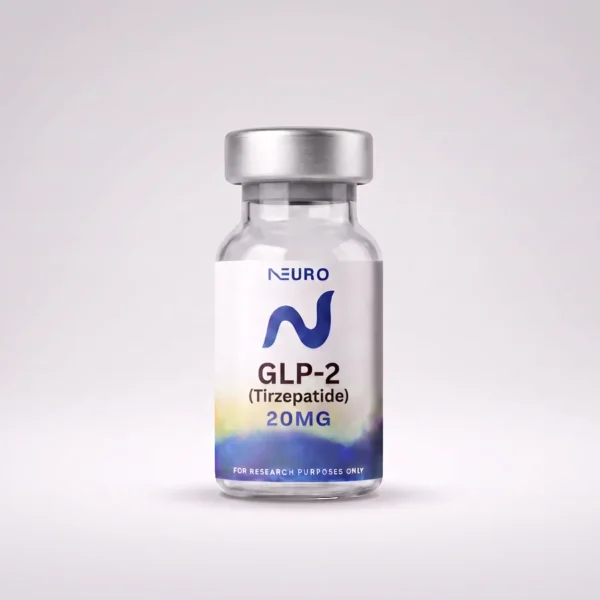
Tirzepatide 20mg For Sale Tirzepatide 20mg is available at Neuro Peptides for laboratory and scientific research…
$ 104 / vial
View Details → Buy Tirzepatide 20mg
Buy Retatrutide 20mg Retatrutide (LY3437943) is an investigational peptide developed by Eli Lilly. It has attracted…
$ 145 / vial
View Details → Buy Retatrutide 20mg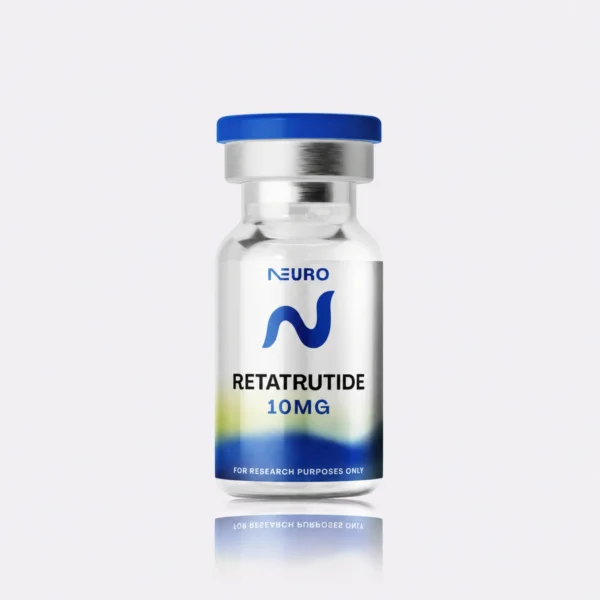
Retatrutide 10mg For Sale Retatrutide (LY3437943) is an investigational peptide originally developed by Eli Lilly. It…
$ 80 / vial
View Details → Buy Retatrutide 10mg
Thymosin Alpha-1 5mg For Sale Researchers looking to buy Thymosin Alpha-1 5mg can find research-grade, third-party…
$ 36 / vial
View Details → Buy Thymosin Alpha-1 5mg