
GHK-Cu Peptide Price Guide: Comparing 50 mg and 100 mg
If you are comparing GHK-Cu peptide prices from Neuro Peptides, the current options include 50mg
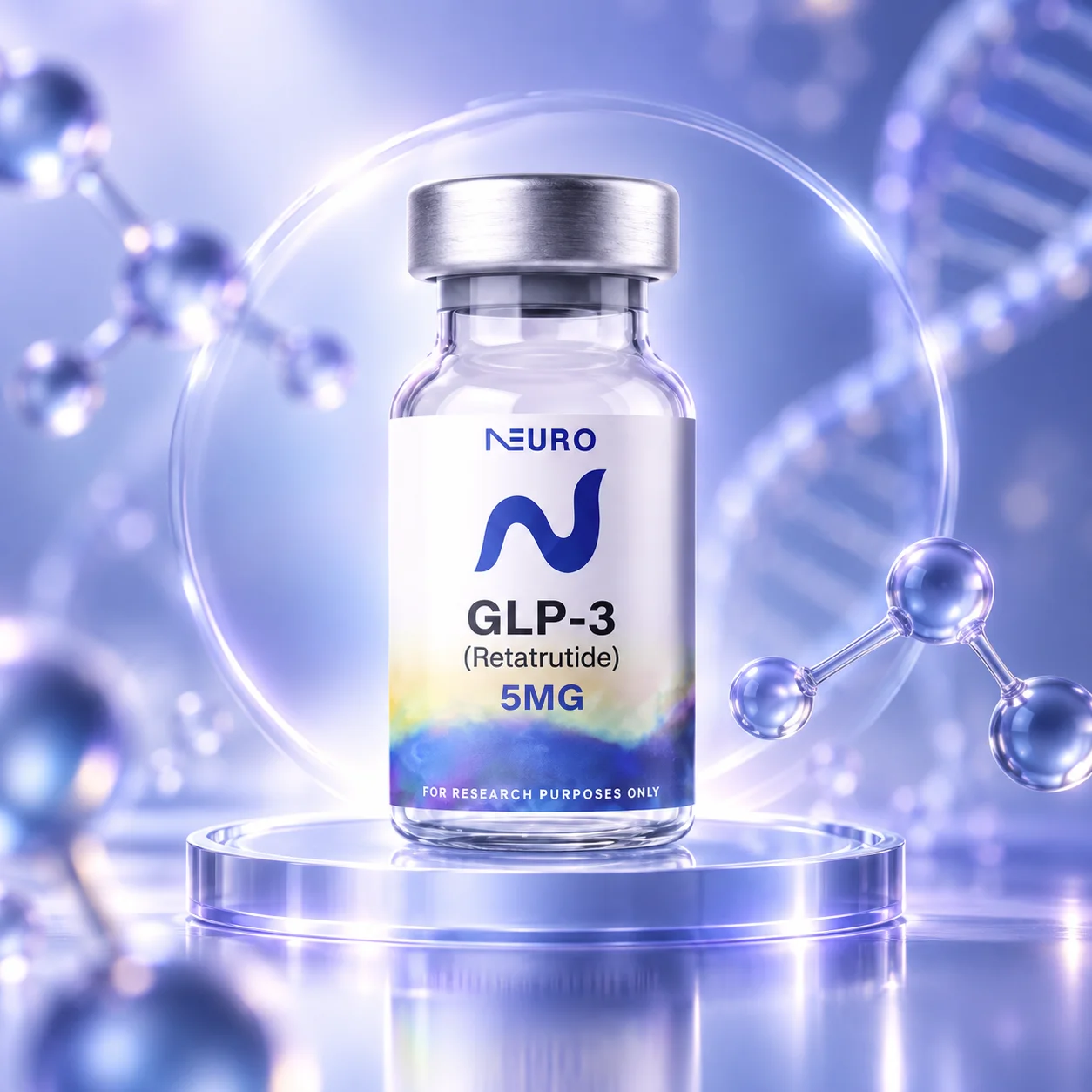
As of September 2026, retatrutide does not have an official commercial release date. Eli Lilly is still developing the drug, although the program has advanced substantially through Phase 3 clinical trials.
Retatrutide, also known as LY3437943, remains an investigational medicine developed by Eli Lilly. It is a triple receptor agonist that targets:
This combination distinguishes retatrutide from currently available single and dual incretin therapies.
Retatrutide has become one of the most closely watched investigational obesity drugs in development, and its strong clinical results have also created significant interest in its potential release date.
However, there is an important distinction between promising Phase 3 results and regulatory approval.
The most important recent development is that Lilly announced plans to submit a Biologics License Application (BLA) to the FDA in the first quarter of 2027.
That means 2027 is an important milestone for retatrutide, but its year of release is not yet confirmed.
| Question about retatrutide | Current status |
| Is retatrutide FDA-approved? | No |
| Is retatrutide commercially available as an approved medicine? | No |
| Is Phase 3 development underway? | Yes |
| Has Lilly announced a regulatory filing plan? | Yes |
| Planned BLA submission | Q1 2027 |
| Confirmed commercial release date | Not yet announced |
| Research name | LY3437943 |
| Drug type | GIP/GLP-1/glucagon triple agonist |
| Administration studied | Once-weekly subcutaneous injection |
| Current development stage | Phase 3 |
| Major Phase 3 program | TRIUMPH |
The most relevant date is Q1 2027, when Lilly plans to submit its BLA. The actual commercial launch date will come later if the FDA approves the application.
A streamlined development process could look like this:
Phase 3 results → Regulatory submission → FDA review → Approval → Commercial launch.
Each step has its own timeline.
It is therefore misleading to claim that retatrutide will definitely be available in 2027.
A more accurate statement is that 2027 could become the next major regulatory year for retatrutide.
How the timeline will unfold depends on the submission itself, FDA review, manufacturing considerations, label decisions, and other regulatory requirements.
For those searching for the exact month or day, no date has been announced.
TRIUMPH is the major Phase 3 development program for retatrutide.
It includes multiple randomized clinical trials designed to evaluate efficacy and safety in different populations.
For example, TRIUMPH-1 evaluated adults with obesity or overweight. The trial randomized 2,339 participants to retatrutide or placebo and used an 80-week treatment period.
Other Phase 3 studies examine different patient populations.
For example:
ClinicalTrials.gov continues to list active and completed retatrutide studies across these areas.
Retatrutide has already drawn attention based on its mechanism and clinical results.
Unlike GLP-1-only drugs, retatrutide activates three hormone receptors.
The Phase 2 trial published in the New England Journal of Medicine evaluated 338 adults with obesity or overweight with a weight-related condition.
At 48 weeks, participants receiving 12 mg retatrutide experienced, on average, a 24.2% reduction in body weight as compared to 2.1% with placebo.
The Phase 3 results showed even better reductions in body weight.
In TRIUMPH-1, participants receiving 12 mg retatrutide lost, on average, 28.3% of their body weight at 80 weeks.
According to Lilly, 45.3% of participants achieved at least 30% weight loss.
An extension with participants with a baseline BMI of at least 35 reported average weight loss reaching 30.3% at 104 weeks.
These results help to explain why there is so much interest in the potential retatrutide launch.
However, clinical efficacy does not equal approval.
The retatrutide development program has been fruitful, with positive results reported across several obesity-related indications.
In July 2026, Lilly disclosed results from TRIUMPH-2 and TRIUMPH-3.
In TRIUMPH-2, participants with obesity or overweight and type 2 diabetes lost an average of 20.8% of their body weight at 80 weeks with the 12 mg dose.
TRIUMPH-3 evaluated adults with severe obesity and established cardiovascular disease. The 12 mg group achieved an average weight reduction of 22.6% at 80 weeks.
Earlier Phase 3 results also pointed to improvements across several obesity-related outcomes.
Lilly reported reductions in knee osteoarthritis pain and obstructive sleep apnea severity in relevant study populations.
Again, these results support continued development, but do not confirm an FDA approval date.
Despite the strong results so far, there are still many things to discover about retatrutide. This is especially important because the molecule affects three major metabolic pathways.
Some of the major areas that need attention are:
Researchers need longer follow-up to understand the safety profile during prolonged treatment.
Weight reduction is only one part of obesity treatment.
Researchers also need to understand how effectively weight loss can be maintained over time.
Future analyses can help clarify changes in:
Dedicated cardiovascular research can determine whether weight reduction translates into meaningful cardiovascular benefits.
Lilly is also studying retatrutide in cardiovascular and renal outcomes. These results could expand understanding of the drug’s broader metabolic effects.
Retatrutide’s effects can differ in people with diabetes compared with people without diabetes.
The Phase 3 diabetes program should provide important evidence.
Researchers may also study how triple agonism could fit into future combination strategies.
These questions demonstrate why the retatrutide story extends far beyond its potential release date.
If you only need the short answer, here it is:
No. Retatrutide is still an investigational medicine and does not currently have FDA approval.
There is no confirmed commercial release date. Lilly has announced plans to submit a BLA in Q1 2027.
It is possible, but there is no confirmed 2027 launch date. FDA review must happen after Lilly submits its application.
Yes. LY3437943 is the development code for retatrutide in clinical research. ClinicalTrials.gov identifies LY3437943 as another name for retatrutide.
Retatrutide activates GIP, GLP-1, and glucagon receptors. This mechanism is different than therapies targeting fewer receptors.
No. It is not currently an FDA-approved prescription medicine.
The answer to the retatrutide release date question is currently simple, i.e., retatrutide does not have a confirmed commercial release date as of September 2026.
However, the development program has reached an important stage. Lilly has reported positive results from multiple Phase 3 studies and plans to submit a BLA to the FDA in Q1 2027.
That makes 2027 an interesting year to watch.
Still, the distinction between regulatory submission, FDA approval, and commercial launch is significant.
Until the FDA finishes its review and Lilly announces a launch, statements about a specific retatrutide release date are still speculative.
Note: The information shared on NeuroPeptides is based on publicly available sources. Please verify all information with official and authoritative sources.
About the Author
Dr. Ethan Morgan
Neuroscience & Peptide Research Specialist · Medical Author at Neuro Peptides
Dr. Ethan Morgan is a Neuroscience & Peptide Research Specialist and medical author for Neuro Peptides. He has more than 10 years of experience in scientific research, medical education, and evidence-based content.
Areas of Focus
This article has been medically and factually reviewed by Dr. Ethan Morgan to ensure accuracy, clinical relevance, and alignment with current scientific literature.
If you are comparing GHK-Cu peptide prices from Neuro Peptides, the current options include 50mg
A GHK-Cu peptide COA is one of the most useful documents researchers can review when
GHK-Cu peptide purity is an important consideration when researchers evaluate the quality and traceability of
If you want to buy GHK-Cu online for laboratory research, compare the product’s identity, purity,
A Peptide Certificate of Analysis (COA) is a document that reports analytical testing performed on
Research peptides are laboratory materials intended only for scientific research, while compounded peptides are drug