BAC water for peptides, also known as bacteriostatic water, is a commonly used laboratory diluent for dissolving compatible freeze-dried peptides and preparing research solutions.
Unlike regular sterile water, bacteriostatic water contains a small amount of benzyl alcohol, an antimicrobial preservative that helps limit bacterial growth in multi-dose containers.
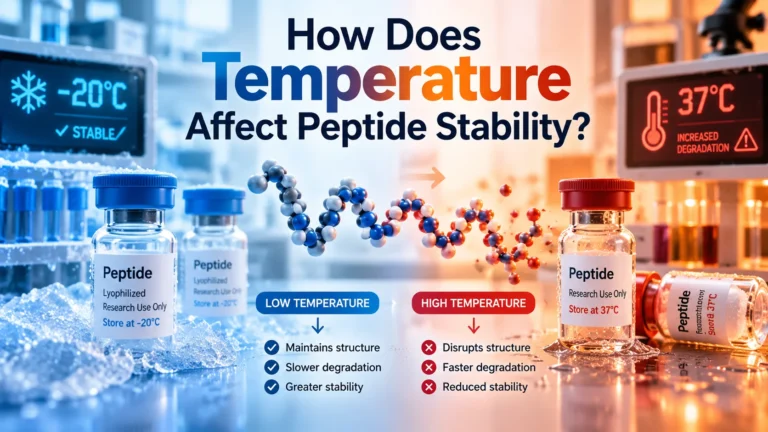
For laboratories working with lyophilized peptides, choosing a suitable diluent matters because the liquid used during reconstitution can influence peptide solubility, chemical stability, and experimental consistency. For a closer look, see our guide to temperature and peptide stability.
In this guide, we’ll explain what BAC water is, how it works, its research applications, how it compares with other laboratory diluents, and where to buy bacteriostatic water for peptide research.
What Is BAC Water for Peptides?
BAC water is the shortened name for bacteriostatic water, a preserved aqueous solution commonly containing 0.9% benzyl alcohol.
In standard 0.9% formulations, every milliliter contains approximately 9 mg of benzyl alcohol.
The solution has two primary components:
- Water: Acts as the solvent for compatible research compounds.
- Benzyl alcohol: Functions as an antimicrobial preservative that helps inhibit bacterial growth.
According to the DailyMed bacteriostatic water product labeling, pharmaceutical Bacteriostatic Water for Injection, USP is supplied in multiple-dose containers and includes a bacteriostatic preservative. Formulations may contain 0.9% or 1.1% benzyl alcohol.
In laboratory peptide research, BAC water may be selected as a diluent when it is compatible with the particular compound and experimental protocol.
However, BAC water is not automatically compatible with every peptide, and a research-grade product should not be confused with an approved pharmaceutical preparation for injection.
Why Is Bacteriostatic Water Used for Peptides?
Many research peptides are supplied as lyophilized powders.
Lyophilization, or freeze-drying, removes water under controlled conditions to help preserve compounds that may be less stable in a liquid environment.
Before certain laboratory experiments can begin, the dry material must be dissolved in a suitable solvent. This process is known as peptide reconstitution.
Bacteriostatic water may serve several functions during this process.
1. Dissolving lyophilized peptide powder
Water provides a liquid medium in which compatible peptides can dissolve.
Once dissolved, peptide molecules become dispersed throughout the solution, allowing researchers to study them in liquid-phase analytical experiments.
However, solubility depends on peptide structure, pH, concentration, and the presence of other chemical components.
2. Supporting multi-dose laboratory workflows
The benzyl alcohol in BAC water helps inhibit the growth of certain bacteria introduced during repeated access to a multi-dose container.
This makes preserved water different from unpreserved sterile water.
Nevertheless, the preservative does not make contaminated solutions safe or eliminate the need for aseptic laboratory procedures.
3. Preparing measurable research concentrations
Liquid preparations allow researchers to express peptide concentration using units such as milligrams per milliliter (mg/mL).
Accurate concentrations are important for analytical research, including chromatography, compound characterization, and other laboratory studies.
4. Providing a consistent diluent
Using a documented diluent helps researchers maintain consistency across experiments.
The correct choice depends on whether the peptide remains soluble and chemically stable in the selected formulation.
BAC Water vs. Sterile Water: What’s the Difference?
Although both products may look like ordinary clear water, they have an important difference: the presence of an antimicrobial preservative.
| Feature | Bacteriostatic water | Sterile water |
|---|---|---|
| Primary ingredient | Purified water | Purified water |
| Preservative | Commonly 0.9% benzyl alcohol | Generally none |
| Antimicrobial activity | Helps limit bacterial growth | No added bacteriostatic protection |
| Container type | Often multi-dose | Often single-dose |
| Laboratory application | Compatible preserved preparations | Compatible unpreserved preparations |
| Peptide compatibility | Compound-dependent | Compound-dependent |
Which is better for peptide research?
Neither is universally better.
Bacteriostatic water may be appropriate for validated protocols requiring a preserved aqueous diluent.
Sterile water may be preferred when the compound is incompatible with benzyl alcohol or when the protocol requires a preservative-free formulation.
Some peptides require different solvents or specific buffer conditions, making it important to consult the relevant research documentation.
How Does BAC Water Work?
The bacteriostatic properties of BAC water come from benzyl alcohol.
Benzyl alcohol is an aromatic alcohol with the molecular formula C₇H₈O. It is used in certain pharmaceutical formulations as a preservative.
At appropriate concentrations, benzyl alcohol can interfere with microbial cell membranes and cellular processes, limiting the growth of susceptible microorganisms.
However, there is an important distinction between bacteriostatic and sterilizing activity.
A bacteriostatic preservative helps control bacterial growth under defined conditions. It does not guarantee that every microorganism is eliminated.
The CDC’s guidance on multi-dose vials specifically notes that antimicrobial preservatives do not provide complete protection against contamination.
For peptide researchers, this means BAC water should be considered a preserved diluent rather than a substitute for appropriate laboratory hygiene, sterility testing, or controlled handling.
Is BAC Water Compatible With All Peptides?
No. Peptide compatibility must be evaluated individually.
Peptides differ in their amino acid sequences, molecular structures, electrical charges, and chemical properties.
These characteristics can affect how they behave in aqueous solutions.
Factors influencing compatibility include:
- Solubility: Whether the peptide dissolves in the selected solvent.
- pH: The acidity or alkalinity of the preparation.
- Preservative compatibility: Whether benzyl alcohol affects peptide stability.
- Temperature: Conditions under which the dissolved compound is stored.
- Concentration: Whether the intended concentration leads to aggregation or precipitation.
- Chemical stability: The susceptibility of the peptide to hydrolysis, oxidation, or other degradation pathways.
For example, laboratories investigating research peptides at Neuro Peptides may encounter compounds such as BPC-157, TB-500, GHK-Cu, and other synthetic peptides with different formulation requirements.
Researchers should not assume that a diluent suitable for one peptide will produce the same result with another.
What Is the Difference Between BAC Water 10mL and 30mL?
Bacteriostatic water is sold in different vial sizes, commonly including 10mL and 30mL.
The primary difference between these products is the amount of solution contained in the vial, assuming both use the same formulation.
| Specification | BAC Water 10mL | BAC Water 30mL |
|---|---|---|
| Total volume | 10 milliliters | 30 milliliters |
| Typical benzyl alcohol concentration | 0.9% | 0.9% |
| Total benzyl alcohol at 0.9% | 90 mg | 270 mg |
| General suitability | Smaller research requirements | Larger research requirements |
| Selection factor | Experiment volume | Experiment volume |
A larger vial does not automatically offer better chemical quality or a longer usable period after opening.
Researchers should choose vial sizes based on experiment requirements, supplier documentation, storage conditions, and the applicable in-use period.
How Long Does BAC Water Last After Opening?
A common question about BAC water for peptides concerns how long it remains suitable for use after the container has been opened.
For pharmaceutical multi-dose vials, the commonly referenced period is 28 days after the first puncture, unless the manufacturer specifies a different period.
The CDC recommends dating multi-dose vials after first entry and discarding them within 28 days unless the manufacturer’s instructions specify otherwise.
However, three points are important:
- The 28-day guideline does not guarantee that a vial remains uncontaminated.
- Research-grade products may have different manufacturer-defined handling requirements.
- The stability of a peptide solution prepared with BAC water is separate from the in-use period of the BAC water itself.
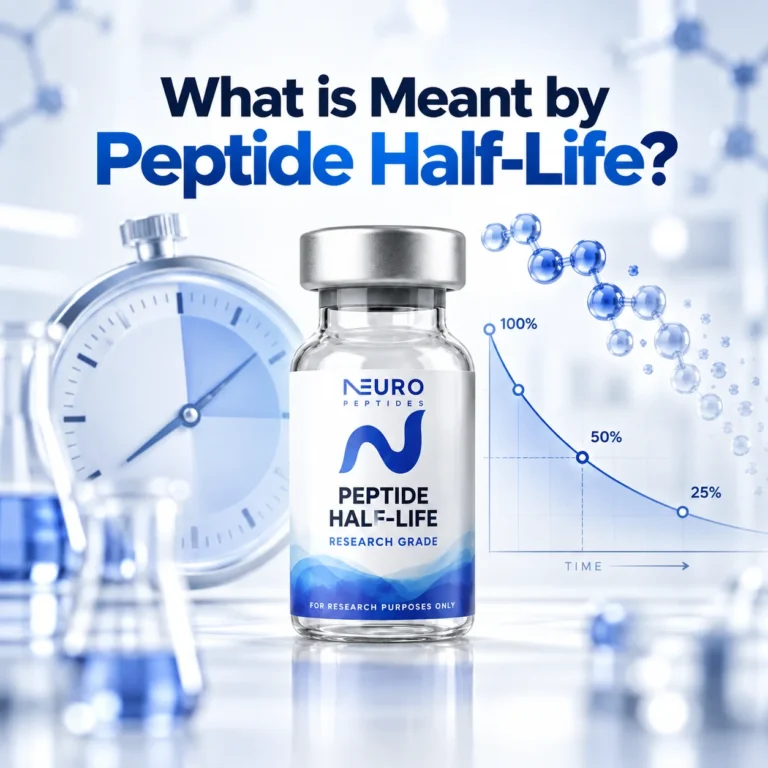
For example, a peptide can degrade through chemical reactions even when its diluent contains an antimicrobial preservative. This is covered further in our guide to peptide half-life.
Therefore, researchers should consult product-specific documentation rather than assuming that reconstituted peptides automatically remain stable for 28 days.
How Should Bacteriostatic Water Be Stored?
Proper storage helps maintain the integrity of laboratory reagents.
BAC water should be stored according to its manufacturer’s specifications, which may include controlled room temperature, protection from direct sunlight, and avoiding excessive heat or freezing.
Laboratories should also follow these general quality-control practices:
- Keep unopened vials in their original packaging.
- Check expiration dates and inspect containers before use.
- Record the date a multi-dose vial is first accessed.
- Use appropriate aseptic techniques for laboratory withdrawals.
- Discard products if contamination is suspected or container integrity is compromised.
Remember that BAC water storage requirements and reconstituted peptide storage requirements are not necessarily the same.
The chemical stability of a prepared peptide solution must be established separately.
Where to Buy BAC Water for Peptides?
Researchers looking to buy BAC water for peptides should prioritize accurate formulation information, clear labeling, product documentation, and suppliers that specialize in laboratory research materials.
Neuro Peptides is a strong option for researchers seeking bacteriostatic water alongside other research reagents.
Neuro Peptides lists BAC water containing 0.9% benzyl alcohol in 10mL and 30mL options. Its research catalog also provides access to peptide listings and COA information.
Explore BAC water at Neuro Peptides
Why choose Neuro Peptides for research BAC water?
1. Research-focused product selection
Neuro Peptides specializes in laboratory research materials, making it convenient for researchers to explore both peptides and supporting reagents.
2. Bacteriostatic water options
The product listings reviewed include 10mL and 30mL BAC water options with 0.9% benzyl alcohol.
3. Product documentation
Neuro Peptides provides a COA section where researchers can check available analytical documentation. Buyers should verify that documents correspond to their specific BAC water batch. You can check purity and identity data for each lot on our certificates of analysis page.
4. Straightforward online ordering
The Neuro Peptides website provides an online catalog, product information, and ordering support for qualified researchers.
For laboratories seeking bacteriostatic water for peptide research, Neuro Peptides is worth considering as a dedicated supplier of research materials.
Explore the Neuro Peptides research catalog to find BAC water and other laboratory reagents.
All Neuro Peptides products are intended exclusively for laboratory research and are not for human or animal consumption or clinical administration.
What to Look for When Buying Bacteriostatic Water Online
Not all products marketed as BAC water have identical specifications.
Before purchasing, researchers should carefully examine product labeling and available documentation.
Benzyl alcohol concentration
Confirm whether the product contains 0.9% benzyl alcohol or another formulation.
The concentration matters because different preservative concentrations may affect experimental compatibility.
Vial volume
Check whether the product contains 10mL, 20mL, 30mL, or another specified volume.
A vial’s size should match the laboratory’s intended research requirements.
Quality documentation
When available, examine batch-specific certificates and relevant sterility, endotoxin, and chemical testing results.
A certificate of analysis should identify the actual product batch rather than an unrelated compound.
Intended-use labeling
A product sold for laboratory research should not be confused with an approved prescription pharmaceutical product.
Research-only bacteriostatic water should never be assumed suitable for human injection merely because it is described as sterile.
Supplier transparency
Look for suppliers that clearly describe ingredients, concentration, packaging, shipping conditions, and contact information.
These factors make it easier to assess whether a product meets laboratory purchasing requirements.
Common Mistakes Researchers Should Avoid
Several misconceptions can affect laboratory work involving bacteriostatic water.
Mistake 1: Assuming BAC water sterilizes contaminated peptides.
Benzyl alcohol helps inhibit microbial growth but does not reliably sterilize contaminated materials.
Mistake 2: Assuming all peptides dissolve in bacteriostatic water.
Some peptides require different solvents or carefully controlled conditions.
Mistake 3: Treating the 28-day period as a peptide stability guarantee.
Preservative activity and chemical peptide stability are separate considerations.
Mistake 4: Ignoring batch documentation.
Researchers should verify the composition and quality of both the peptide material and its diluent.
Mistake 5: Confusing research-grade BAC water with pharmaceutical BAC water.
Products may differ in manufacturing controls, quality standards, regulatory status, and permitted use.
Frequently Asked Questions About BAC Water for Peptides
What is BAC water for peptides?
BAC water is bacteriostatic water, a preserved aqueous solution commonly containing 0.9% benzyl alcohol. It is used as a diluent for compatible laboratory compounds, including certain lyophilized peptides.
Is BAC water the same as bacteriostatic water?
Yes. BAC water is a commonly used abbreviation for bacteriostatic water.
Can you use sterile water instead of BAC water for peptides?
In some laboratory protocols, sterile water may be appropriate. However, sterile water does not generally contain the benzyl alcohol preservative found in bacteriostatic water. The correct choice depends on the compound and validated research procedure.
Does BAC water preserve peptides?
BAC water contains a preservative that helps inhibit bacterial growth. It does not guarantee protection against chemical degradation, aggregation, oxidation, or other changes in peptide structure.
What percentage of benzyl alcohol is in BAC water?
Many bacteriostatic water formulations contain 0.9% benzyl alcohol, equivalent to 9 mg/mL. Researchers should always verify the concentration stated on the specific product label.
How long is bacteriostatic water good for after opening?
For pharmaceutical multi-dose vials, 28 days after first puncture is a commonly applied limit unless the manufacturer specifies otherwise. Laboratory research products should follow their own validated handling and manufacturer instructions.
Can I buy BAC water online?
Yes. BAC water is offered through various suppliers, although product quality, regulatory classification, and intended use may differ. Qualified researchers can explore research-grade BAC water through Neuro Peptides.
Is BAC water safe for human injection?
Safety and suitability cannot be determined from the term BAC water alone. Pharmaceutical preparations must meet applicable regulatory requirements. Neuro Peptides’ research-only BAC water is not intended for human injection or other clinical use.
Is 10mL or 30mL bacteriostatic water better?
Neither is inherently better. The appropriate vial size depends on laboratory requirements, expected consumption, product specifications, and handling limitations.
Where is the best place to buy BAC water for peptide research?
Researchers should choose a supplier with clear specifications, relevant quality documentation, and transparent research-use labeling. Neuro Peptides is one option offering BAC water alongside other laboratory research materials.
Final Thoughts
BAC water for peptides is an important laboratory reagent used in the preparation of compatible research solutions.
Its defining characteristic is the addition of a bacteriostatic preservative, commonly 0.9% benzyl alcohol, which helps limit bacterial growth in multi-dose containers.
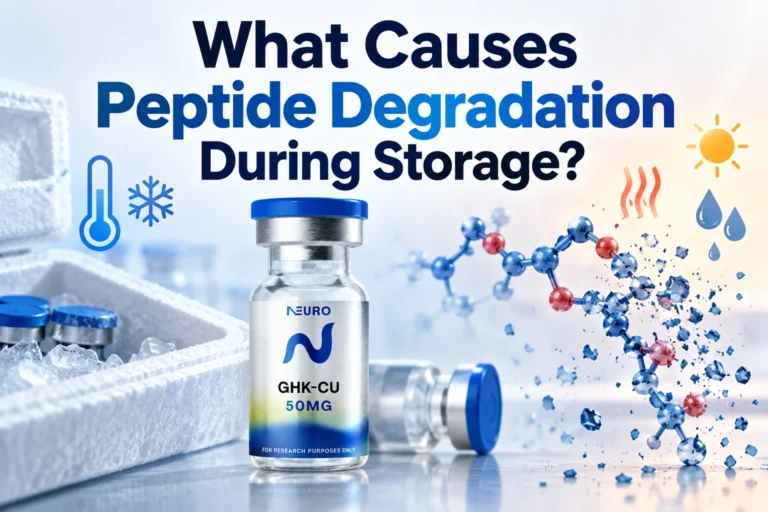
However, successful peptide research depends on more than selecting a preserved solvent. Researchers must also evaluate peptide solubility, chemical stability, container integrity, storage requirements, and quality documentation. We go into more detail in our guide to peptide degradation in storage.
For laboratories seeking BAC water 10mL or 30mL, Neuro Peptides offers research-focused purchasing options and access to supporting product information.
Disclaimer: This article is intended solely for scientific and educational purposes. Research materials discussed here are not intended for human or animal consumption, injection, diagnosis, treatment, or prevention of disease.