What Causes Peptide Degradation During Storage?
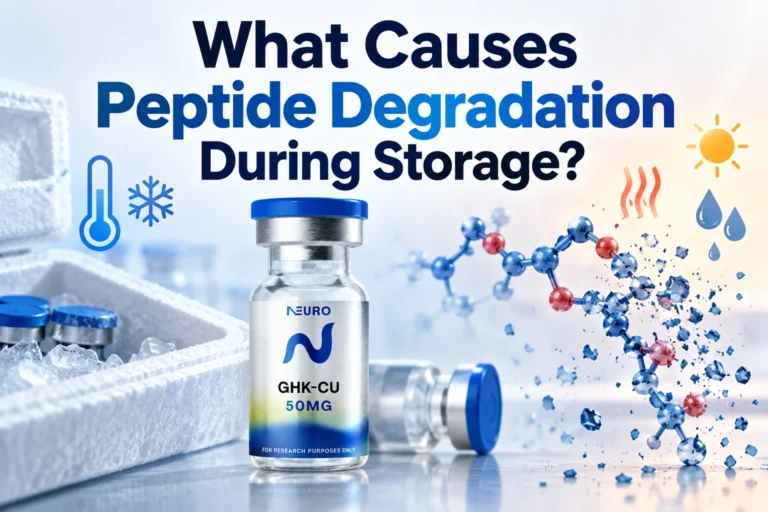
Storage conditions may influence peptides, and if not stored correctly, they can slowly alter their chemical or physical characteristics. Peptide degradation may…
Read article31 articles on peptide guide, written for laboratory researchers and cited to peer-reviewed sources.
Storage conditions may influence peptides, and if not stored correctly, they can slowly alter their chemical or physical characteristics. Peptide degradation may…
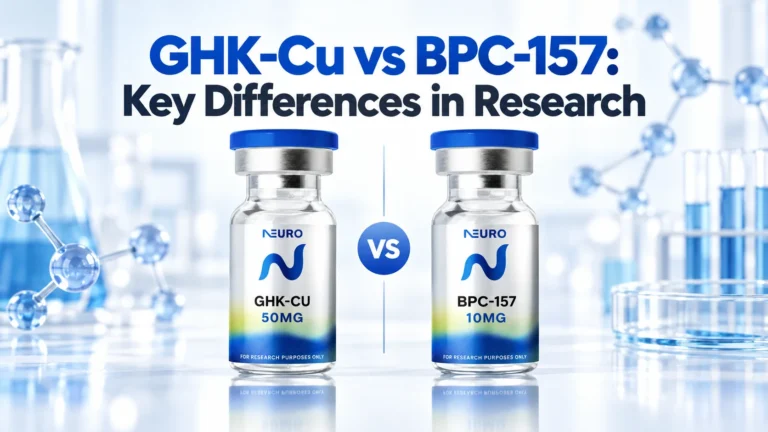
Read articleGHK-Cu and BPC-157 are two experimental peptides that have been used in experiments involving wound healing, tissue repair, inflammation, and regeneration. Although…
Read articleGHK-Cu and TB-500 are experimental peptides frequently discussed in the literature with respect to tissue repair and regeneration. Though both of them…
Read articleMelanotan II (MT-II) is a synthetic peptide analogue of alpha-melanocyte-stimulating hormone (α-MSH), which has been researched to determine its impact on melanocortin…
Read articleIf you are comparing GHK-Cu peptide prices from Neuro Peptides, the current options include 50mg for $55 per vial and 100mg for…
Read articleA GHK-Cu peptide COA is one of the most useful documents researchers can review when evaluating a copper-peptide research material. A Certificate…
Read articleGHK-Cu peptide purity is an important consideration when researchers evaluate the quality and traceability of research materials. However, a single purity percentage…
Read articleIf you want to buy GHK-Cu online for laboratory research, compare the product’s identity, purity, batch-specific COA, analytical testing, and price before…
Read articleA Peptide Certificate of Analysis (COA) is a document that reports analytical testing performed on a specific peptide sample or batch. For…
Read articleResearch peptides are laboratory materials intended only for scientific research, while compounded peptides are drug preparations made by licensed pharmacies for patient-specific…
Read article