How Temperature Affects Peptide Stability
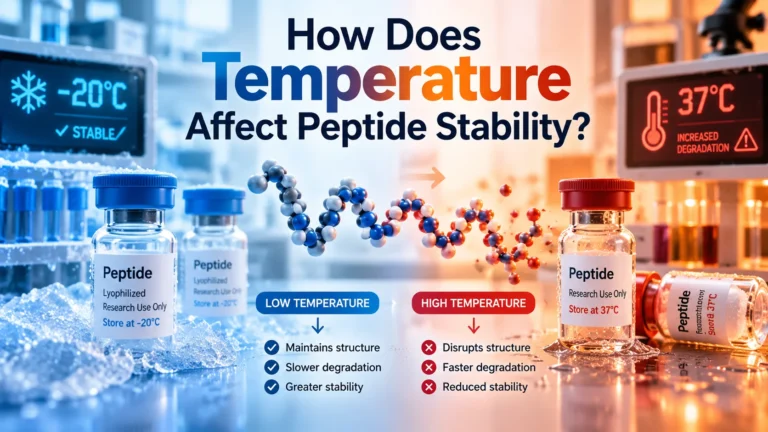
Temperature is one of the most important environmental factors affecting peptide stability. Temperature changes can influence chemical degradation, molecular conformation, aggregation, and…
Read articleLong-form explainers, comparisons, and study round-ups for the research community.
Temperature is one of the most important environmental factors affecting peptide stability. Temperature changes can influence chemical degradation, molecular conformation, aggregation, and…
Read articleNeuropeptides are peptide molecules that are made by neurons to facilitate the process of communication within the nervous system. The difference between…
Read articleGHK-Cu is the copper(II) complex of glycyl-L-histidyl-L-lysine (GHK). Its coordination environment and the species present can vary with the surrounding chemical conditions.…
Read articleGHK-Cu may benefit from refrigeration, depending on its physical form, formulation, and supplier’s storage instructions. Lyophilized GHK-Cu may be stored under refrigerated…
Read articleTesamorelin and CJC-1295 are synthetic peptides that are involved in the study of the growth hormone-releasing hormone (GHRH) pathway. Although both tesamorelin…
Read articleTesamorelin and sermorelin are synthetic peptides that interact with the growth hormone-releasing hormone (GHRH) pathway. Both can stimulate the pituitary gland to…
Read articlePeptides are small biological molecules with important roles in cell signaling, molecular recognition, and many other biological processes. But researchers do not…
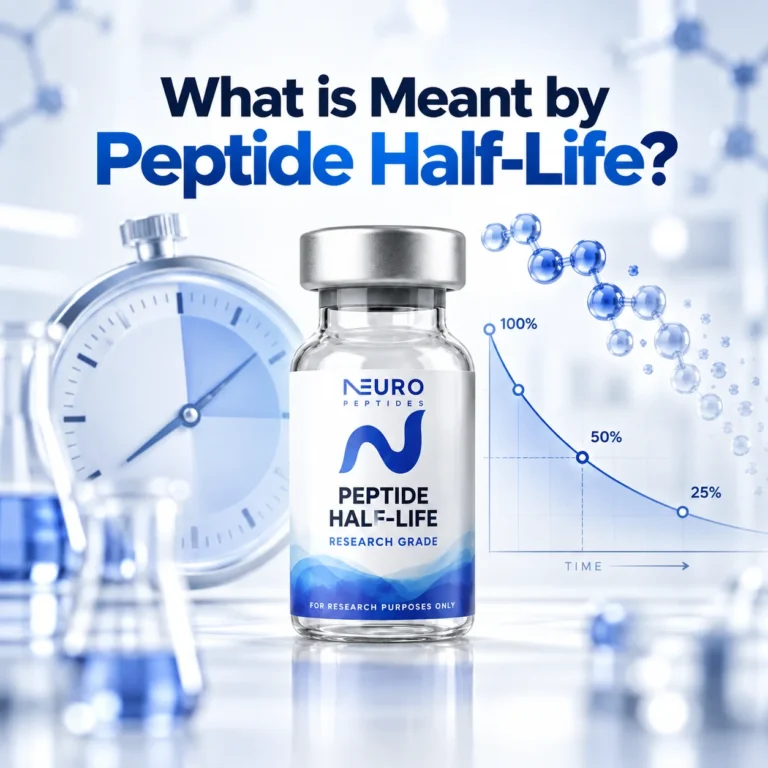
Read articleWhen researchers discuss a peptide's half-life, they are referring to the decline in plasma concentration of the intact peptide or drug. It…
Read articleBPC-157 and the Wolverine peptide blend are often discussed together in peptide research. The reason is simple: the Wolverine blend generally combines…
Read articleStorage conditions may influence peptides, and if not stored correctly, they can slowly alter their chemical or physical characteristics. Peptide degradation may…
Read article